
Emo rap blends confessional punk-rock vulnerability with trap production. Also called sad rap or emo hip hop, it combines emo and pop-punk’s emotional honesty with 808-heavy beats, lo-fi guitar loops, and autotuned vocals. Its lyrics often explore depression, heartbreak, anxiety, substance abuse, and loneliness.
Emo rap is the genre that happens when confessional punk-rock vulnerability collides with trap production. Sometimes called sad rap or emo hip hop, it fuses the raw emotional honesty of emo and pop-punk with 808-heavy beats, lo-fi guitar loops, and autotuned vocals. The lyrics circle around depression, heartbreak, anxiety, substance abuse, and loneliness — subjects that mainstream hip hop historically kept at arm's length.
What separates emo rap from simply "sad music" is its dual identity. A track can make you cry and nod your head at the same time. The melodies borrow from bands like My Chemical Romance and Brand New, while the drums and vocal delivery stay rooted in modern hip hop. That tension — between singing and rapping, between vulnerability and bravado — is exactly what drew millions of listeners to the genre and turned bedroom SoundCloud uploads into Billboard hits.

Where Did Emo Rap Come From? A Timeline From SoundCloud to Spotify
Every genre has a creation myth. For emo rap, it starts not in a major-label boardroom but on anonymous SoundCloud pages and Tumblr blogs where a handful of artists decided that hip hop and emo were never really that far apart.
2012–2013: The Underground Seeds. Artists like Bones (TeamSESH) and the collective GothBoiClique began blending dark, lo-fi production with emo and goth aesthetics. Around the same time, Swedish rapper Yung Lean and his Sad Boys crew introduced a melancholic, cloud-rap-adjacent sound that resonated with internet-native listeners worldwide. None of these acts were chasing radio play; they were building communities on forums and streaming platforms.
2015–2017: The SoundCloud Explosion. Lil Peep emerged as the genre's most visible figure, uploading tracks that paired distorted guitar samples with trap drums and lyrics about Xanax, heartbreak, and self-destruction. His debut mixtape Lil Peep; Part One and the EP Crybaby became cult favorites almost overnight. As Rolling Stone documented, this era turned SoundCloud into the genre's de facto record label.
2018–2019: Mainstream Arrival. By 2018, emo rap was one of the fastest-growing genres on Spotify. Juice WRLD's "Lucid Dreams" peaked at No. 2 on the Billboard Hot 100, XXXTentacion's 17 debuted at No. 1 on the Billboard 200, and Lil Uzi Vert's "XO Tour Llif3" had already crossed a billion streams. The genre was no longer underground — it was pop culture.
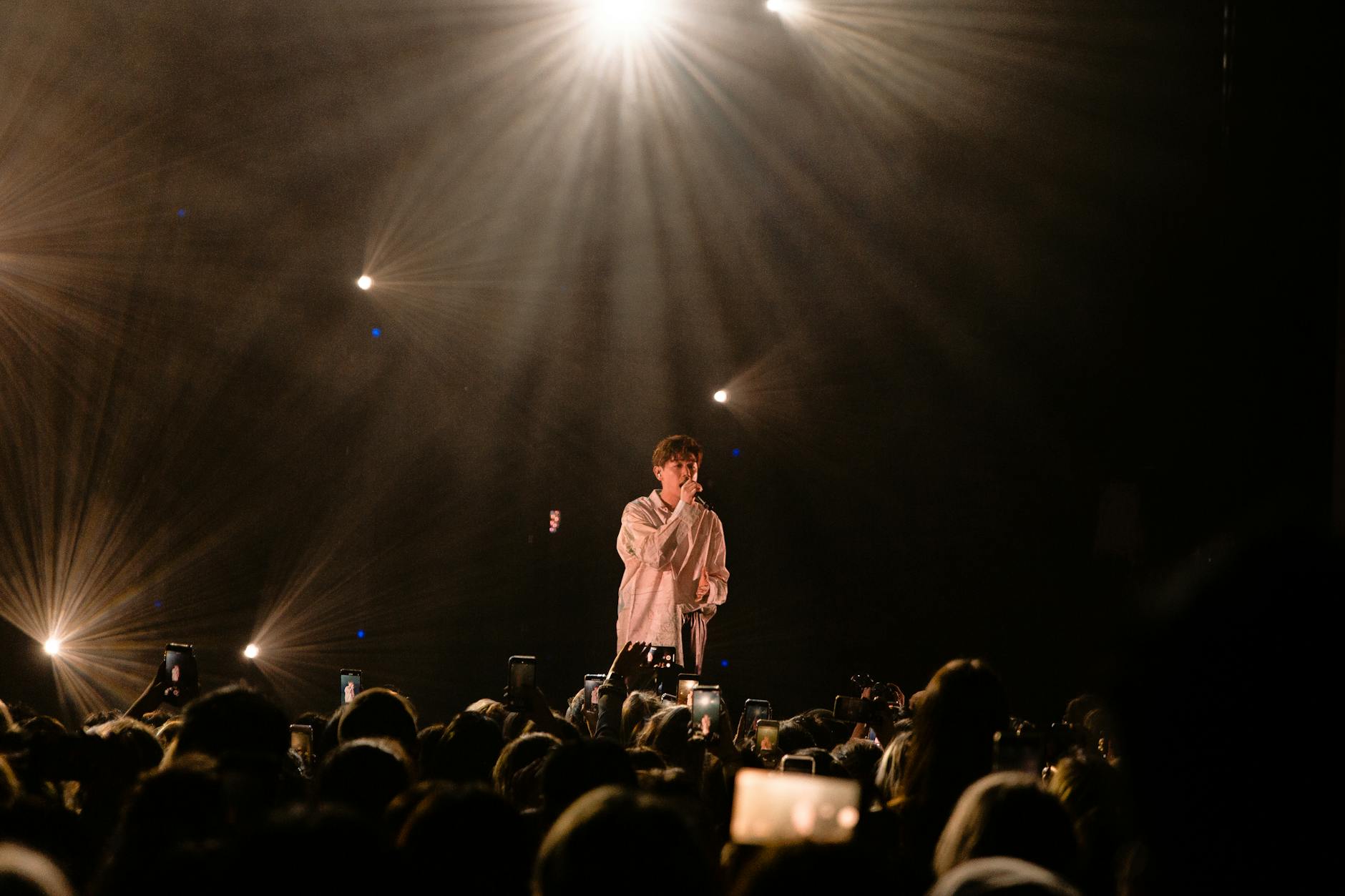
Mainstream Breakthrough — Lil Peep, XXXTentacion & Juice WRLD
Three emo rap artists defined the genre's crossover moment, and all three left an indelible mark that extends far beyond their discographies.
Lil Peep was called "the future of emo" by Pitchfork before his death in November 2017 at age 21. His music treated emo and hip hop not as opposites but as two dialects of the same emotional language. Tracks like "Awful Things" and "Star Shopping" remain touchstones for anyone discovering the genre today. His passing forced a wider cultural conversation about mental health and substance abuse in the music industry.
XXXTentacion pushed emo rap into more abrasive, experimental territory. His 2017 album 17 — a sparse, acoustic-leaning project recorded largely in his bedroom — debuted at the top of the charts and proved that quiet, painful honesty could compete with maximalist production. Songs like "Jocelyn Flores" and "SAD!" became some of the most-streamed emo rap songs of all time.
Juice WRLD brought melodic fluency that made the genre accessible to pop and R&B audiences. "Lucid Dreams," built on a Sting sample, became a generational anthem. His freestyling ability — he famously freestyled for over an hour on Tim Westwood's show — demonstrated that emo rap demanded real skill, not just sadness. His death in December 2019 at age 21 deepened the genre's association with loss, but also galvanized a community of young artists who saw themselves in his music.
The loss of all three artists within roughly two years created a paradox: emo rap's biggest ambassadors were gone, yet their catalogs continued to grow in streams and influence. Their legacies became the foundation on which the next wave of artists would build.
15 Best Emo Rap Songs That Define the Genre
Narrowing the best emo rap songs to a single list is an exercise in heartbreak itself, but these 15 tracks capture the genre's emotional range, sonic evolution, and cultural impact. Each one is a gateway into a different corner of emo rap.
"Lucid Dreams" — Juice WRLD (2018) — Bittersweet nostalgia over a Sting-sampled guitar loop. Mood: longing.
"SAD!" — XXXTentacion (2018) — Minimalist piano and raw vocal pain that became a posthumous No. 1 hit. Mood: despair.
"Awful Things" — Lil Peep ft. Lil Tracy (2017) — The quintessential GothBoiClique anthem, blending pop-punk hooks with trap percussion. Mood: toxic love.
"XO Tour Llif3" — Lil Uzi Vert (2017) — Dark, danceable, and devastatingly catchy. Mood: reckless heartbreak.
"Star Shopping" — Lil Peep (2015) — An acoustic guitar loop and whispered vocals that feel like a late-night voice memo. Mood: vulnerability.
"Jocelyn Flores" — XXXTentacion (2017) — A lo-fi elegy built on a Potsu sample. Mood: grief.
"Robbery" — Juice WRLD (2019) — Soaring melodies over heavy 808s, exploring love as addiction. Mood: obsession.
"Falling Down" — Lil Peep & XXXTentacion (2018) — A posthumous collaboration that united two icons. Mood: melancholy.
"I Fall Apart" — Post Malone (2016) — Post Malone at his most emotionally exposed, with arena-rock guitar tones. Mood: devastation.
"Witchblades" — Lil Peep & Lil Tracy (2016) — Distorted bass and sing-rap delivery that defined the SoundCloud era. Mood: nihilism.
"Save Me" — XXXTentacion (2017) — Under two minutes of unfiltered pleading. Mood: isolation.
"Legends" — Juice WRLD (2018) — A tribute to Lil Peep and XXXTentacion that doubles as a genre manifesto. Mood: mourning.
"Hate Me" — Elijah Who (2018) — Lo-fi bedroom production with a gut-punch hook. Mood: self-doubt.
"Let Me Down Slowly" — Alec Benjamin (2018) — Acoustic storytelling on the genre's poppier fringe. Mood: resignation.
"BACKGROUND" — BoyWithUke (2022) — A newer entry proving emo rap's DNA lives on in bedroom-pop hybrids. Mood: invisibility.
You can explore a broader catalog of emo rap tracks and playlists on Volt.fm to keep digging.
Create a personal playlist of these tracks and pay attention to how each producer uses guitar tone and drum pattern differently — it's the fastest way to train your ear for the genre.
What Makes an Emo Rap Beat? Key Production Elements Explained
Understanding emo rap at the listening level is one thing. Understanding how to make emo rap at the production level is where things get interesting. The genre's sonic identity rests on a specific set of production choices that separate it from standard trap or indie rock.
Minor key chord progressions are non-negotiable. Most emo rap beats live in natural minor or harmonic minor scales, often cycling through simple four-chord loops (think i–III–VII–VI or i–iv–v–III). The harmonic language is closer to early 2000s emo bands than to mainstream hip hop.
Trap drum programming provides the rhythmic backbone. You'll hear punchy 808 kicks, crisp snares on the two and four, and rapid hi-hat rolls that add urgency beneath the melancholy melodies. The contrast between aggressive drums and sad harmony is a defining tension of the genre.
Guitar samples and loops are the genre's signature texture. These range from clean, reverb-drenched arpeggios to overdriven power-chord riffs. Many producers sample directly from emo and post-hardcore records; others record original guitar parts and process them through amp simulators.
Atmospheric pads and ambient textures fill the space between guitar and drums. Lush synth pads, vinyl crackle, rain samples, and reversed reverb tails create the immersive, almost cinematic quality that makes emo rap feel like a mood rather than just a song.
Lo-fi processing ties everything together. Subtle tape saturation, bit-crushing, and low-pass filtering give tracks a worn, intimate quality — as if the music was recorded on a four-track in someone's childhood bedroom.
Autotune and vocal effects complete the picture. Pitch correction isn't used for perfection; it's used for texture. Heavy autotune settings create that signature warble between singing and rapping, while stacked vocal layers and ad-libs add emotional weight.
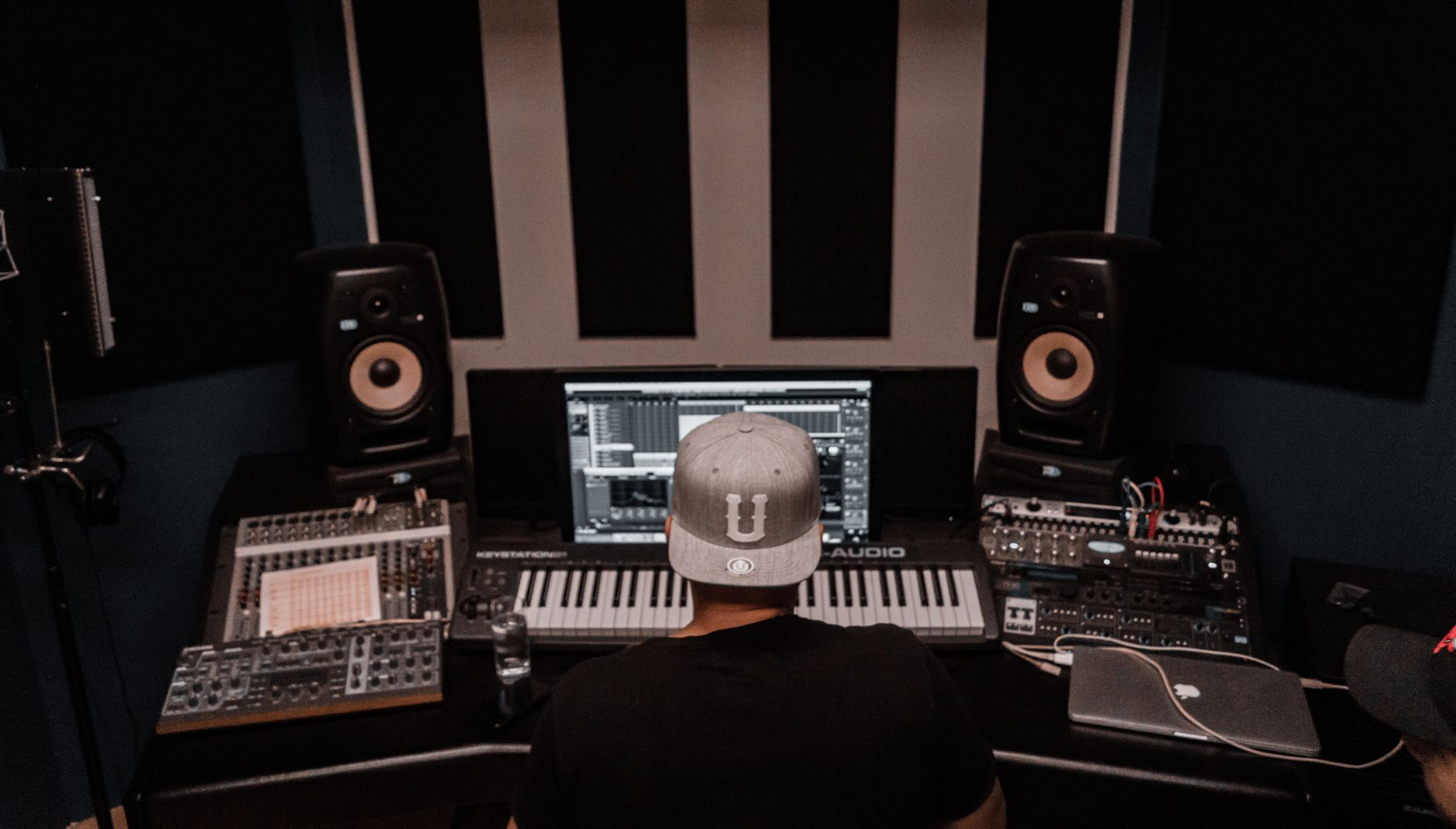
Step-by-Step: How to Make Emo Rap in Your Bedroom
You don't need a professional studio to create an emo rap track. Here's a five-step workflow for turning raw emotion into a finished demo — even if you've never touched a DAW before.
Step 1: Choose a minor key chord progression. Start with a simple loop — four chords in A minor or E minor work well. Play them on a piano VST or find a royalty-free loop. The progression should feel melancholic but forward-moving, not static.
Step 2: Program your trap drums. Layer an 808 kick with a tight snare on beats two and four. Add hi-hat rolls (sixteenth or thirty-second notes) and experiment with open hi-hats on off-beats. Keep the pattern simple at first; complexity can come in the chorus.
Step 3: Layer guitar or piano samples. A clean electric guitar arpeggio or a lo-fi piano melody on top of your chords adds the emotional texture that defines the genre. Run the sample through reverb and a subtle chorus effect to widen the stereo image.
Step 4: Record vocals with autotune. Write a short hook and a verse. Record your vocals — even a rough take on your phone — and apply pitch correction. Don't aim for perfection; aim for feeling. Let the autotune artifacts become part of the sound.
Step 5: Add reverb and delay for space. Apply a medium-to-long plate reverb on your vocals and a quarter-note delay with low feedback. This creates the spacious, ethereal quality that makes emo rap feel immersive. Roll off some high end on the reverb return to keep things warm.
If you want to skip the technical setup entirely, tools like MelodyCraft's AI rap generator let you input your lyrics or even just a mood description and generate a full emo rap demo in minutes — no instruments or production skills required.

Writing Emo Rap Lyrics That Actually Connect
Production gets people to press play. Lyrics are what make them press repeat. Writing emo rap lyrics that resonate requires more than venting into a notes app — it demands craft.
Start from a specific moment, not a general feeling. "I'm sad" is a statement. "I found your hoodie behind the dryer and wore it to the gas station at 3 a.m." is a scene. The best emo rap lyrics ground abstract emotions in concrete, sensory details that listeners can see and feel.
Use slant rhyme and internal rhyme to keep the flow unpredictable. Perfect end rhymes can make emotional lyrics sound like greeting cards. Slant rhymes (e.g., "alone" / "phone" / "home" / "numb") feel more conversational and raw. Internal rhymes — placing rhyming syllables in the middle of lines — add rhythmic texture without forcing the structure.
Write hooks like texts you'd send a friend at midnight. The best emo rap hooks are short, direct, and feel like overheard confessions. Think of Juice WRLD's "All girls are the same" or Lil Peep's "I've been waiting for you." They work because they sound like something a real person would actually say, not a lyric someone labored over.
Don't shy away from contradiction. Emo rap thrives on emotional tension: wanting someone back while knowing they're toxic, feeling numb but craving intensity, hating yourself but refusing to change. Lean into those contradictions — they're what make the genre feel honest.
Record yourself talking about the emotion first, without any beat. Listen back and pull out the most vivid phrases. Those unfiltered moments often become your strongest bars.
Emo Rap vs. Trap, Cloud Rap & Sad Pop — What's the Difference?
Emo rap sits at a crossroads of several genres, and the boundaries can feel blurry. This comparison breaks down the key differences so you can place the sound precisely.
The simplest way to think about it: emo rap takes the drums from trap, the atmosphere from cloud rap, the emotional honesty from emo, and wraps it all in a vocal delivery that sits somewhere between singing and rapping. If a track makes you want to cry and nod your head, it's probably emo rap.
Is Emo Rap Dead? Why the Genre Still Matters
Every few months, a think piece declares that emo rap is dead. The argument usually points to the passing of its biggest stars and the decline of SoundCloud as a discovery platform. But the evidence tells a different story.
In 2024 and into 2025, artists like Destroy Lonely, Ken Carson, and Lil Darkie continue to release music that carries emo rap's emotional DNA, even if the production has evolved toward hyperpop, digicore, or pluggnb. The genre didn't die — it mutated. Its influence is audible in the melodic rap dominating streaming charts, in the vulnerability that artists like Yeat and SZA bring to trap-adjacent production, and in the bedroom-pop movement that owes its confessional ethos to Lil Peep's SoundCloud uploads.
More importantly, the reason emo rap resonated hasn't gone away. Gen Z and Gen Alpha audiences continue to prioritize mental health conversations, and music remains one of the most accessible ways to process difficult emotions. The genre gave an entire generation permission to be publicly sad in a culture that often rewards toughness, and that permission hasn't been revoked.
Emo rap isn't dead. It's just everywhere now — so embedded in the fabric of modern music that it no longer needs its own lane.
Create Your Own Emo Rap Track with AI Tools
You've read about the history, studied the production elements, and maybe even started sketching out lyrics. Now it's time to turn all of that into an actual track.
MelodyCraft makes that step surprisingly simple. The platform offers two creation modes designed for exactly this moment:
Lyrics to Rap: Paste in the emo rap lyrics you've written — the midnight confessions, the slant rhymes, the contradictions — and MelodyCraft generates a complete track around them, matching beat style, vocal tone, and mood to your words.
Idea to Rap: Don't have finished lyrics yet? Describe the feeling you want to capture — "heartbreak over lo-fi guitar with heavy 808s" — and the AI builds a full demo from that prompt alone.
No instruments required. No studio time. No production degree. Just your emotions and a few minutes.
Whether you're a first-time creator testing the waters or an experienced artist looking to prototype ideas faster, AI-assisted tools remove the technical barriers between feeling something and making something.


Turn Your Pain Into a Track
Write your lyrics or describe a mood — MelodyCraft builds the emo rap demo for you.