

Every great MC started somewhere — usually stumbling over words, losing the beat, and rhyming "cat" with "hat" until something finally clicked. Learning to make a freestyle rap isn't about being born with talent; it's about training your ear, stacking your vocabulary, and getting comfortable with the uncomfortable silence between bars. This guide breaks the process into clear, repeatable steps so you can go from awkward first attempts to confident freestyle rap sessions faster than you'd expect.
Every great MC started somewhere — usually stumbling over words, losing the beat, and rhyming "cat" with "hat" until something finally clicked. Learning to make a freestyle rap isn't about being born with talent; it's about training your ear, stacking your vocabulary, and getting comfortable with the uncomfortable silence between bars. This guide breaks the process into clear, repeatable steps so you can go from awkward first attempts to confident freestyle rap sessions faster than you'd expect.
What Is Freestyle Rap (And Why Does It Matter)?
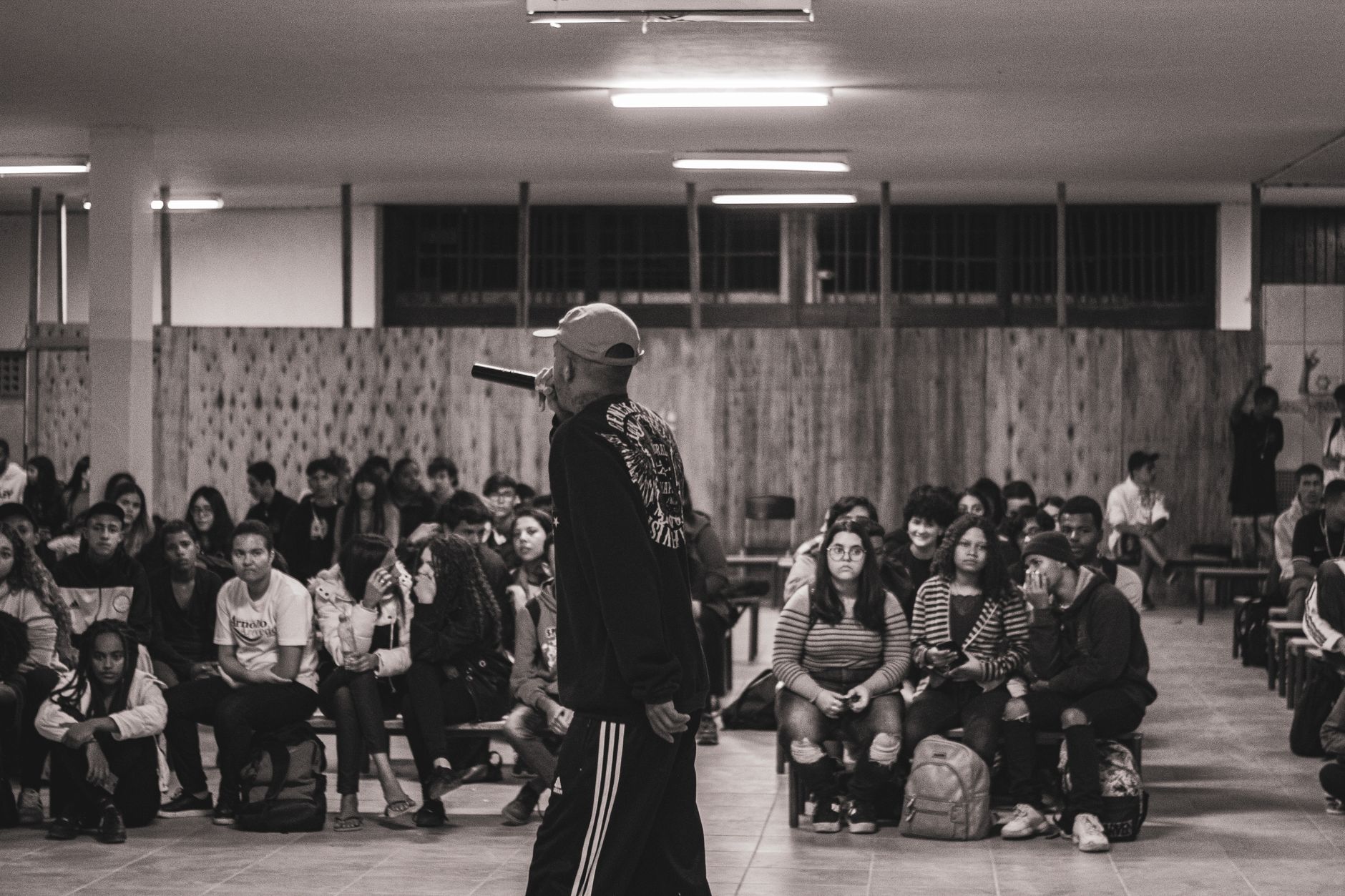
The term freestyle rap carries two distinct meanings depending on who you ask. In its purest form — often called "off the dome" — freestyle means improvising lyrics in real time with zero preparation. You hear a beat, you open your mouth, and whatever comes out is the verse. There are no notebooks, no pre-written punchlines, and no safety net. This is the version you see in cyphers, rap battles, and viral clips of artists like Harry Mack freestyling over audience suggestions.
Then there's the older-school definition, sometimes called a "written freestyle." Big Daddy Kane and other golden-era legends used the word to describe any rap that was free of a particular topic — a verse you could spit over any beat because it wasn't tied to a specific song concept. Under this definition, a rapper might write bars in advance but still call the performance a freestyle because the content was versatile and unattached.
Both interpretations matter because they represent different skills on the same spectrum. Off-the-dome improvisation sharpens your reflexes, teaches you to think in rhyme patterns, and builds stage confidence. Written freestyles develop your craft, wordplay density, and delivery. The exercises in this guide lean toward the improvisational side, but every technique here will make your written work sharper too.
5 Steps to Make a Good Freestyle Rap From Scratch
If you want to know how to make a good freestyle rap, stop thinking of it as a single talent and start treating it as a stack of smaller skills. Each step below isolates one of those skills so you can drill it on its own before combining everything into a full performance.

Step 1 — Lock In Your Rhythm Before You Spit a Single Word
The number-one mistake beginners make is rushing to rap before they actually feel the beat. Freestyle rap beats follow a 4/4 time signature almost universally, which means every measure has four beats. Before you say a single word, spend at least 16 bars just listening. Nod your head on beats one and three. Snap or clap on beats two and four — those are where the snare usually hits.
Once the kick-snare pattern feels automatic in your body, start humming a simple melodic rhythm over the instrumental. You're not writing lyrics yet; you're locking your internal clock to the tempo. Think of it like stretching before a sprint. Skipping this step is why so many freestyles sound rushed or off-beat within the first few bars.
A practical drill: play any boom-bap instrumental, close your eyes, and count out loud — "one, two, three, four" — for a full minute. Then switch to tapping the rhythm on a table. When you can keep time without consciously thinking about it, you're ready to add words.
Step 2 — Build a Rhyme Bank You Can Pull From Instantly
Improvisation isn't truly random. Jazz musicians internalize scales; freestyle rappers internalize rhyme clusters. The goal is to have groups of rhyming words so deeply memorized that when you land on one word at the end of a bar, three or four rhyme options instantly surface in your mind.
Start by building a simple rhyme bank. Pick five "anchor" words you naturally use in conversation, then list four rhymes for each. Here's an example:
Drill this table until you can recall any row in under two seconds. Then expand it — add slant rhymes, multisyllabic rhymes, and compound phrases. Tools like RhymeZone are excellent for discovering rhyme families you wouldn't think of on your own. Over time, your freestyle rap rhymes will feel less like a search and more like a reflex.
Practice one rhyme family per day. By the end of a month you'll have 30 clusters — more than enough to sustain a two-minute freestyle without repeating end rhymes.

Step 3 — Use Filler Phrases to Keep the Flow Alive
Here's a secret that separates smooth freestylers from people who freeze after four bars: filler phrases. These are short, rhythmically neutral expressions you can drop into a verse while your brain catches up to the next rhyme. Every experienced freestyler uses them — they just do it so seamlessly that listeners don't notice.
Keep a mental list of go-to fillers like these:
"You already know"
"Let me tell you something"
"Check it out, yo"
"I said, I said"
"Listen up, listen up"
"And it goes a little something like"
"Yeah, uh-huh, for real though"
"And I ain't even done yet"
The difference between a freestyle that sounds polished and one that sounds like a train wreck often comes down to how well you bridge the gaps. Here's a quick comparison:
The key is variety. If you lean on the same filler every four bars, it becomes a crutch instead of a tool. Rotate through your list and practice weaving fillers into different positions — beginning of a bar, middle, or as a bridge between couplets.
Step 4 — Freestyle About What's Right in Front of You
Abstract topics kill beginner freestyles. When you try to rap about "life" or "the struggle" off the top, you end up reaching for clichés and running out of material fast. Instead, look around the room and describe exactly what you see. The water bottle on the desk. The cracked phone screen. The dog sleeping on the couch.
This technique works because it gives your brain a constant stream of concrete nouns to rhyme with. You don't have to invent content — reality supplies it. As you get more comfortable, you can start connecting objects to metaphors and storytelling, but in the early stages, pure observation is your best friend.
Step 5 — Record Everything and Review It
The fastest way to improve any freestyle rap is to record your sessions and listen back. It's uncomfortable at first, but playback reveals timing issues, repeated filler patterns, and missed rhyme opportunities that you'll never catch in the moment.
Use your phone's voice memo app for quick captures. If you want to take it further, try turning your best freestyle ideas into polished demos. MelodyCraft's AI Rap Generator lets you feed in a concept or a few bars and build out a full instrumental-backed track, which is a great way to see whether your improvised lines hold up as an actual freestyle rap song.
Best Freestyle Rap Beats to Practice Over in 2026
Not all beats are created equal when it comes to freestyle practice. The best freestyle rap beats share a few characteristics: a simple, looping structure that doesn't distract you with constant changes; clear, punchy drum patterns so you can lock into the pocket easily; and plenty of sonic space — meaning the instrumental leaves room for your voice rather than filling every frequency.
Here's a breakdown of the four most popular styles for freestyle rap instrumental beats, along with recommended BPM ranges, search terms, and difficulty levels:
For curated collections, Beats to Rap On maintains a regularly updated library of free freestyle rap beats sorted by mood and tempo. Searching YouTube for "[style] type beat freestyle rap beat" will also surface thousands of options.
Download or bookmark five beats in each category so you always have a practice playlist ready. Switching styles mid-session forces your flow to adapt and builds versatility.
How to Pick the Right Beat for Your Skill Level
Most guides dump a list of beats without telling you which ones to start with. That's like handing a new guitarist a Jimi Hendrix solo and saying "good luck." Your freestyle rap instrumental beat should match where you are right now, not where you want to be.
Beginners (0–3 months of practice): Stick to boom bap or lo-fi beats in the 70–85 BPM range. The slower tempo gives your brain more time to find rhymes, and the straightforward drum patterns make it easy to stay on beat. Look for instrumentals with a two- or four-bar loop — minimal variation means fewer surprises.
Intermediate (3–6 months): Move into trap beats around 85–100 BPM. The half-time feel keeps the overall pace manageable, but the rolling hi-hats and 808 slides introduce rhythmic complexity that will push your flow forward. Start experimenting with triplet cadences and double-time bursts.
Advanced (6+ months): Drill beats at 100 BPM and above are where real improvisational agility gets tested. The aggressive energy demands sharper punchlines and tighter breath control. If you can freestyle cleanly over a 140 BPM drill beat, you can handle almost any cypher.
If you want to generate custom practice beats tailored to a specific BPM and style, the MelodyCraft AI Rap Generator can create instrumentals on demand — useful when you've worn out every "type beat" on YouTube and need fresh loops to keep your ears from getting lazy.
Avoid practicing exclusively over one tempo. Your muscle memory will lock into that BPM, and switching to a faster or slower beat in a live setting will throw you off.
Conclusion
The best freestyle rap performances look effortless, but behind every smooth cypher is hours of deliberate practice — locking into beats, memorizing rhyme clusters, leaning on filler phrases, and reviewing recordings with honest ears. You don't need a studio, a producer, or even an audience to start. You need a beat, a willingness to sound bad for a while, and the discipline to show up daily.
Start with one step from this guide today. Pick a boom-bap beat, pull up your rhyme bank, hit record, and freestyle for sixty seconds. Tomorrow, do it again. Within a few weeks, you'll hear the difference — and so will everyone in the room when you finally step into that cypher.


Turn Your Freestyle Into a Full Track
Drop your best bars into MelodyCraft and get a polished demo with beats, vocals, and mix — in minutes.