

Ambient music works best when it stays in the background and matches your goal: calm sleep soundscapes, steady study textures, or spacious meditation layers. This guide shows how to tell ambient apart from lo-fi or white noise, choose a style that fits the moment, and avoid tracks that pull attention back to themselves. If you want to sketch your own calm loop instead of hunting playlists, MelodyCraft gives you a fast place to start.
From here, we move from the definition into the practical part: which ambient textures are easiest to ignore, when they help versus distract, and how MelodyCraft fits if you’d rather make a custom calm track than keep jumping between playlists.

What is ambient music (and what makes it different from background music)?
Ambient music is music that prioritizes texture, space, and slow evolution over catchy hooks—often described as “atmospheric” because it creates an environment you can inhabit rather than a story you must follow. The idea is closely associated with artists like Brian Eno and the notion of music that can be “as ignorable as it is interesting” (a helpful framing echoed in mainstream coverage such as this BBC piece on ambient’s place in listening culture).
A simple one-sentence definition: Ambient music is sound designed to color a room—calm, spacious, and gently shifting, without constantly grabbing your attention.
Three “you’ll know it when you hear it” differences from generic background music:
It has a sense of space (air, distance, reverb, stereo width), not just something “playing behind you.”
It changes slowly (small movements over minutes), rather than big chorus/verse moments.
It’s attention-light (you can work, read, or rest without feeling pulled into the track).
Background music is an umbrella term for anything you put on while doing something else. Ambient music is a specific approach to sound and arrangement.
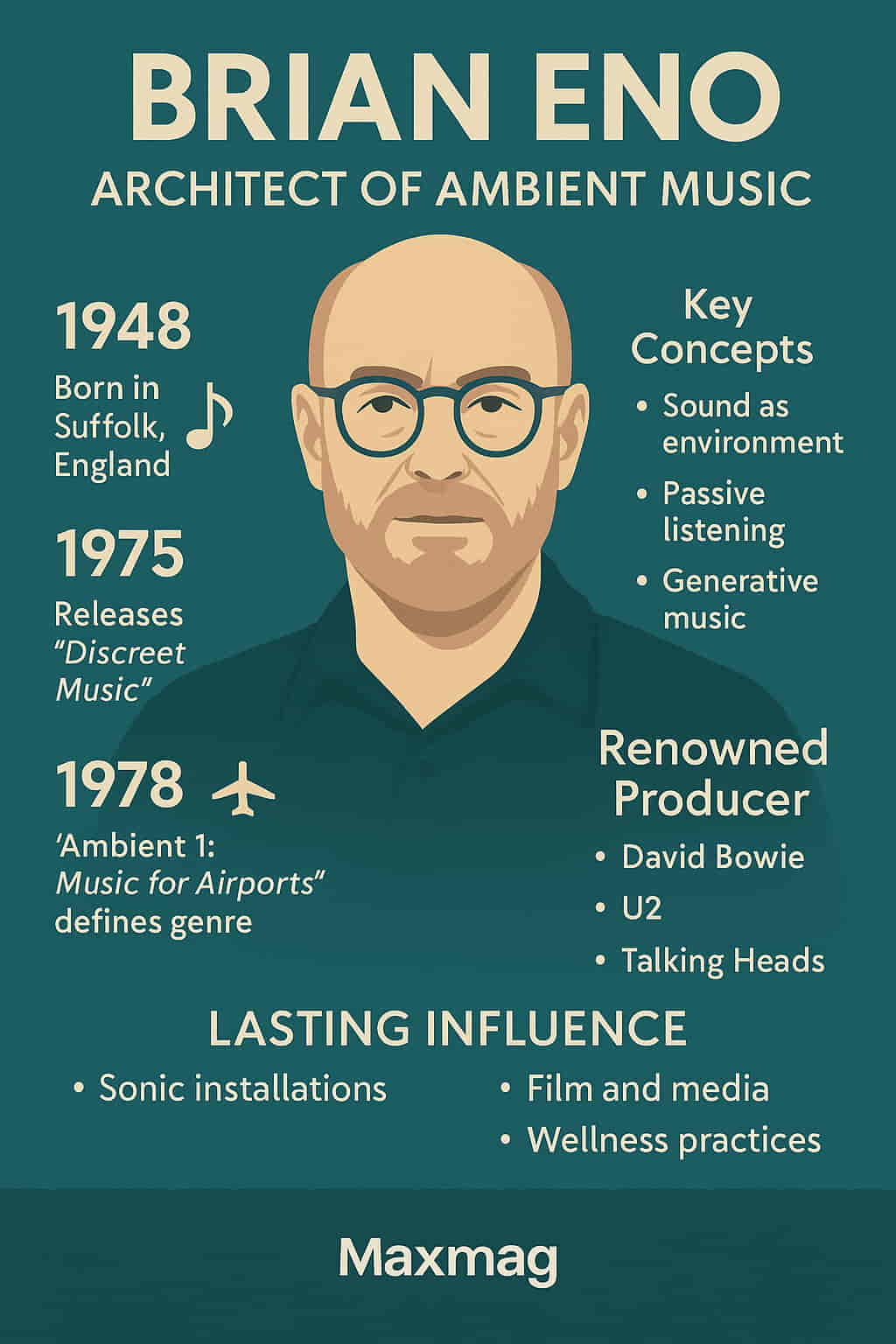
The defining traits: texture over hooks, slow evolution, and “ignorable but interesting”
If you want an actionable way to identify ambient music, use this quick recognition checklist:
Ambient “yes” signals
No obvious verse/chorus structure (or it’s extremely subtle)
Minimal or no lyrics (voices, if present, feel like texture rather than “a singer”)
Gentle dynamics (few sudden loud moments)
Repetition that feels soothing, not mechanical
The track still feels “alive” because tiny details evolve over time
Ambient “probably not” signals
Strong backbeat that makes you nod along (that’s often closer to chillhop/lo‑fi)
Big drops, dramatic crescendos, jump-scare sound effects
Lyrics that your brain starts processing automatically (especially while reading/writing)
Common “not ambient” counterexamples (close cousins)
Post-rock build-ups: gorgeous, but the loud/quiet arcs can hijack attention.
Vocal chill playlists: great vibes, but words compete with your working memory.
EDM “chill” tracks with drops: relaxing until the arrangement flips.
If you catch yourself waiting for “the next part,” you’re likely not listening to ambient (or it’s too eventful for your goal).
Ambient vs lo‑fi vs classical vs white noise: which one should you try first?
If your goal is studying or sleep, choosing the right kind of sound matters more than the label. Here’s a practical comparison:
Two key clarifiers:
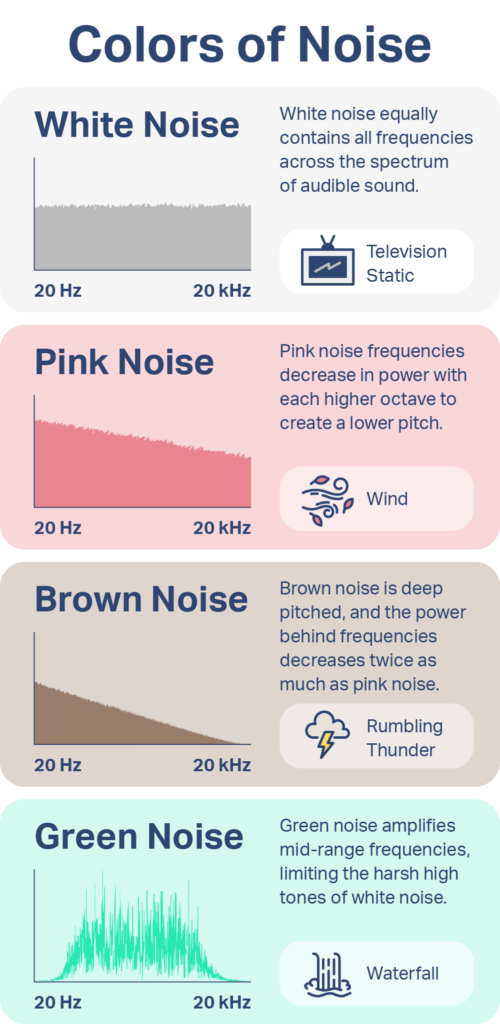
White noise ≠ music. It’s a steady signal mainly used for masking, not musical progression.
Lo‑fi usually has a beat. That beat can be helpful momentum—or a distraction if you’re doing language-heavy work.
If you’re unsure, start with ambient music for reading/writing, pink/brown noise for pure masking, and lo‑fi for “I need a gentle push” productivity.
Why do people use ambient music for studying, sleep, and relaxation?
People reach for ambient music for studying and ambient music for sleep because it solves three everyday problems in a non-dramatic way:
Masking distractions (sound camouflage): A consistent bed of sound can cover sudden interruptions—keyboard clicks, hallway voices, traffic bursts—so your attention isn’t constantly “reset.”
Managing arousal level: For some people, silence feels too sharp and stimulating environments feel too chaotic. Ambient can land in the middle: calm but not empty.
Ritual and cueing: Playing the same type of sound at the start of work or bedtime becomes a cue: “now we focus” or “now we wind down.”
Who tends to benefit most (in everyday terms)?
People who work in variable noise environments (cafés, open offices, roommates)
People who get “pulled” by lyrical content while reading/writing
People who do better with a repeatable routine rather than willpower alone
For a productivity-oriented angle, Atlassian’s overview of science-backed productivity playlists aligns with the practical takeaway: it’s not “music makes everyone focus,” it’s “the right audio, at the right volume, for the right task.”
What research says about music/noise and attention (in plain English)
Research on music, noise, and attention generally points to three useful truths: effects vary by person, the task matters, and volume/familiarity matter a lot. In other words, some people concentrate better with steady sound, while others perform best in near silence—especially for complex tasks that use verbal working memory.
A readable way into this topic is to scan broad summaries like this open-access review on music and cognitive/attention effects, then apply the practical parts to your own setup: keep it consistent, keep it quiet, and match the sound to the task.

Need a calmer track than a random playlist?
Sketch ambient background music for sleep, study, or relaxation in a few clicks.
This article is for education only, not medical advice. If any audio reliably worsens your sleep, anxiety, or headaches, stop using it and consider speaking to a professional.
When ambient music can make focus worse (and how to fix it)
Ambient music for studying can absolutely “flip” into distraction. The good news: most failures are fixable in seconds.
Common reasons it backfires
Too loud (you start actively listening)
Too much change (new textures every 10–20 seconds)
Human voice/whispers (your brain tries to decode language)
Too novel (you keep noticing “cool sounds”)
Low-frequency rumble that feels tiring or “pressurizing”
Quick fixes
Drop volume until it’s present but easy to ignore
Switch to long-form tracks (10–60 minutes) with fewer events
Choose “no vocals / no spoken word”
If bass bothers you, try a brighter ambient mix or brown/pink noise at low level
The 30-second self-test
Start your task (open the doc, start the problem set).
Press play.
After 30 seconds, ask: Am I following the music, or is it simply filling the room?
If you’re following it, it’s either too loud or too eventful—change one variable.
Which style of ambient music fits your goal (sleep, deep work, meditation, reading)?
The best ambient music isn’t “the best track,” it’s the best match between goal → attention level → sound design. Use this as a simple scene selector:
Sleep: lowest dynamics, least surprise, minimal spikes
Deep work: steady textures, minimal melody, no lyrics
Meditation/yoga: spacious, slow, gentle movement, predictable arcs
Reading/writing: warm harmony, low drama, no “big moments”

Ambient music for sleep: long-form drones, gentle soundscapes, and low dynamics
Ambient music for sleep works best when it behaves like a stable environment: low dynamics, few transitions, and no sudden sound effects. Look for tracks described as drone, sleep soundscape, deep space, or soft field recordings.
Practical playback tips:
Use a sleep timer or app fade-out so it doesn’t run forever.
Prefer single long pieces (30–120 minutes) to reduce track-change surprises.
If you use “8-hour” videos, remember: you don’t have to listen 8 hours. You’re borrowing the continuity, not committing to the full duration.
Ambient music for studying: steady textures that don’t steal your working memory
Ambient music for studying should be “focus-safe”: it masks the room without becoming a second project for your brain.
Rules of thumb for deep work:
No lyrics (especially if you’re reading or writing)
Weak or no drums (or a very subtle pulse)
Loop-like continuity (no jump cuts, no dramatic transitions)
Warm, gentle timbres (pads, soft synths, processed piano/guitar)
If you’re writing (emails, essays, coding comments), go even simpler: less melody, more texture. The more your task uses language, the more you want the music to stay out of the way.
Ambient music for meditation or yoga: slower movement, more space, fewer surprises
For meditation and yoga, choose ambient with space and pacing—sounds that support breath and movement rather than “perform.”
Two common options:
Guided meditation audio: a voice leads you; useful, but it’s not the same as ambient music.
Pure ambient: no instructions; better if you want to self-direct.
A note of caution: content labeled “binaural beats” or “brainwave” often comes with strong claims. It may feel pleasant, but treat it as a listening preference—not guaranteed therapy.
Ambient music for reading & writing: harmonic warmth over dramatic crescendos
For reading, you want stability. For writing, you can tolerate a bit more emotion—just avoid anything that triggers timing/anticipation.
Try this mini-checklist:
Volume: low enough you can forget it’s on
Distraction: if you keep “checking the music,” it’s not a fit
Singing impulse: if you want to hum along, choose something less melodic
A simple way to choose:
Reading: drone, soft pads, minimal piano textures
Writing: warm ambient with gentle harmonic motion, minimal rhythm
For more ideas on shaping a personal sound environment, this guide on creating an ambient sound environment offers useful framing you can apply whether you use playlists or your own tracks.
What are the main ambient subgenres (with quick listening cues)?
Most lists name subgenres but don’t teach you how to recognize them. Here’s a quick “how it sounds” cheat sheet—each with cues, best use, and a pitfall to watch for.
Dark ambient: drones, tension, and cinematic unease
Sound cues: low drones, shadowy textures, distant metallic tones, slow tension. Common elements: ominous pads, cavern reverb, sparse “found sounds.” Best for: nighttime focus, writing scenes, gaming, immersive headphones sessions. Avoid if: you’re prone to anxiety before bed—dark ambient can deepen mood.
“Dark” doesn’t mean loud or aggressive; it’s about tone color and emotional lighting.
Space ambient: wide stereo, “cosmic” pads, and slow arpeggios
Sound cues: very wide stereo field, floating pads, gentle arpeggios, “starship hum.” Common elements: long reverb tails, slow-filter movement, airy highs. Best for: creative thinking, design work, brainstorming, walking. Avoid if: you need intense calculation—big spacious mixes can invite daydreaming.
Search-friendly keywords: cosmic, interstellar, nebula, deep space, floating pads. Headphones make the width and detail much more obvious.
Ambient techno / chillout: subtle pulse for people who need momentum
Sound cues: steady pulse, understated kick, minimal percussion, hypnotic repetition. Common elements: soft 4/4 or broken beats, evolving synth textures. Best for: daytime productivity, cleaning, light admin work, long commutes. Pitfall: if the beat becomes the “main character,” it can steal attention from reading/writing.
Difference from pure ambient: ambient techno gives you a time-grid (momentum) rather than pure atmosphere.
Drone & minimalist ambient: one idea, stretched for minutes
Sound cues: sustained tone(s), very slow change, near-static harmony. Common elements: single-note drones, minimal chord shifts, gradual timbre morphs. Best for: deep work, sleep routines (if gentle), calming a busy room. Pitfall: boredom—if you expect a chorus, you’ll feel “nothing is happening.”
How not to get bored:
Treat it like lighting, not a movie.
Start with shorter pieces (5–10 minutes), then move to longer forms.
Nature soundscapes & field recordings: rain, wind, rooms, and real-world texture
Sound cues: rain, wind, distant traffic, café murmur, birds, waves. Two types to notice:
Pure nature audio: mostly unedited recordings
Hybrid ambient: field recordings with synth pads underneath
For ambient music for sleep, the pitfall is surprise transients (sudden thunder cracks, loud birds). If you’re a light sleeper, pick “steady rain” or “brown noise + rain” over “storm drama.”
Where to find good ambient music (without getting trapped in low-quality loops)?
The challenge isn’t access—it’s filtering. High-quality ambient has clean transitions, controlled dynamics, and no random jump scares. Low-quality uploads often have harsh compression, audible loop seams, or ad interruptions that defeat the purpose.
Use platforms differently:
YouTube: great for long-form mixes, but quality varies wildly.
Communities (Reddit): better for human recommendations and niche subgenres.
Streaming services: easiest way to build a personal “focus-safe” playlist.
Independent labels/artist pages: best quality and context, but more effort.
YouTube 8-hour mixes: how to spot clickbait vs well-produced soundscapes
Long mixes can be excellent—if they’re made with care.
Quick screening tips:
Scan comments for warnings like “ads too loud,” “sudden noises,” “not seamless.”
Prefer uploads that mention seamless loop, no mid-roll ads, or provide timestamps.
If you hear a repeating “bump” every few minutes, that’s a loop seam—keep searching.
Use a timer (phone or app) so you control the session length.
If you’re using YouTube for sleep, consider downloading/offline playback where possible to reduce unexpected interruptions.
Reddit recommendations: how to search threads and build a personal starter list
Reddit is one of the fastest ways to get real-world suggestions—especially for niche needs like sleep-safe tracks. Start with threads like this one on best ambients for sleep and then refine.
Use these search templates (copy/paste into Reddit search):
best ambient for sleep / best ambient for studying
ambient similar to [artist/album]
no vocals ambient / drone ambient recommendations
Typical needs you’ll see (and can use to guide your own list):
“I wake up easily—anything with no sudden peaks?”
“I like spacey pads—what’s similar to this album?”
“New to ambient—give me a gentle entry point.”
When a recommendation links to a personal channel/playlist, do a quick credibility check: consistent uploads, clear tracklist, and no complaints about volume jumps.
Streaming playlists: how to build a “focus-safe” ambient playlist that doesn’t distract
Algorithmic playlists are convenient, but they can insert random vocals, loudness jumps, or beat-driven tracks. Build your own “focus-safe” ambient playlist like a tool, not a mood board:
Rules for adding a track
It can segue cleanly (no abrupt intros/outros)
No sudden drums or vocals
Similar loudness to the rest (avoid one track that’s noticeably louder)
Ideally 6+ minutes (longer tracks reduce constant novelty)
The “20 seed tracks” method
Add ~20 tracks you already know are safe.
Let your platform recommend similar tracks.
Only keep additions that pass your 30-second self-test (from above).
Re-check the playlist during real work—remove anything that steals attention.
If you want to generate your own consistent ambient beds (so the “vibe” never breaks), you can also create custom long-form ambience in tools like MelodyCraft and export loops that match your workflow.
Best ambient music to start with (albums, artists, and long-form pieces)
A good starter list should reduce choice overload. Below are approachable picks grouped by how they feel and when they’re useful. (Availability varies by platform; searching the album name usually finds a stream.)
If you want a deeper historical sweep, Rough Trade’s rough guide to ambient music is a solid companion read.
Gentle & warm starters (for workdays and calm evenings)
*Brian Eno — Ambient 1: Music for Airports***: soft, airy loops for reading and light work.
*Hiroshi Yoshimura — Music for Nine Post Cards***: minimal, bright calm; great “morning desk” energy.
*Harold Budd — The Pavilion of Dreams***: dreamy piano ambience that feels tender, not dramatic.
*Loscil — Plume***: steady, muted textures for focus without tension.
*Tycho — Dive (instrumental chill/ambient-adjacent)*: more rhythmic warmth; good for daytime flow.
*Stars of the Lid — And Their Refinement of the Decline***: slow orchestral drones, ideal for long sessions.
Listening approach: start with 30 minutes while doing something simple (tidying, inbox), then try it during real work once it feels familiar.
Cinematic & spacious picks (for creativity and big ideas)
*Biosphere — Substrata***: cold-air spaciousness; great for deep thinking.
*William Basinski — The Disintegration Loops (selected)*: slow, haunting evolution; powerful for creative work.
*Carbon Based Lifeforms — World of Sleepers***: wide stereo pads; “space ambient” friendly.
*Jon Hopkins — Music for Psychedelic Therapy (ambient portions)*: immersive, very spatial; use when you can surrender attention.
*Aphex Twin — Selected Ambient Works Volume II***: eerie, expansive rooms of sound.
These are excellent for brainstorming and design—but if you’re doing heavy math or dense reading, the emotional “cinema” can pull you away from the page.
Deep & dark picks (for nighttime focus, games, and mood)
Lustmord — key dark ambient works: iconic low-end dread; intense but controlled.
*Tim Hecker — Ravedeath, 1972 (ambient/noise-adjacent)*: huge textures, emotional weight.
Ben Frost — darker ambient-adjacent pieces: tension-forward, more aggressive edges.
Atrium Carceri — cinematic dark ambient: narrative, game-friendly atmospheres.
Raison d’être — ritual dark ambient: slow, immersive darkness.
Mood effects vary a lot person-to-person. If “dark” makes you edgy, swap to neutral drone or space ambient instead.
Sleep-length works (when you want one piece to run all night)
Sleep-length ambient reduces the risk of a track change waking you up.
What to look for:
45–120 minute single pieces or albums with seamless continuity
Very low dynamics, no sudden “feature sounds”
Versions that minimize ad interruptions
Playback setup:
Use a fade-out timer
Prefer offline playback if ads are a risk
Keep volume conservative (you want masking, not immersion)
How to listen to ambient music so it actually helps (volume, gear, routine)
Ambient works best when you treat it like a system you can repeat, not a one-off mood. Your goal is consistency: consistent volume, consistent environment, consistent start cue.
Here’s a 10-minute setup checklist you can run anytime:
Pick one long track or a short “safe” playlist.
Set volume low (you should be able to think over it).
Turn off notifications (or use focus mode).
Decide: headphones (detail) or speakers (comfort).
Set a timer (Pomodoro or sleep timer).
Start the task immediately—don’t “pre-listen” for five minutes.

The volume rule: quiet enough to ignore, clear enough to mask distractions
For ambient music for studying, volume is the #1 lever. Instead of thinking in decibels, use a body-based rule:
Correct volume: you can hear it, but you don’t feel pulled to “follow” it.
Too loud: you notice melody details, start anticipating changes, or your inner voice competes.
Too quiet: it stops masking distractions and you keep reacting to the room.
A practical cue: if you catch yourself thinking “this part is nice” during work, lower volume one notch.
Headphones vs speakers: when each is better (and what to avoid at night)
Both are valid—choose based on comfort and your environment.
Headphones are better when: you need isolation, you’re in a noisy space, or you want stereo detail (space ambient shines here).
Speakers are better when: you’re at home, you want comfort, or you’re preparing for sleep.
At night, be careful with headphones if you’re a side sleeper (ear pressure is real). If you do use them, prioritize comfort and safe volume—hearing protection beats perfect ambience every time.
Building a repeatable focus ritual (Pomodoro + ambient playlists)
A ritual beats motivation. Pair ambient with a simple timer so your brain learns the cue.
Template A: 25/5 (classic Pomodoro)
Start cue: one specific ambient “starter” track
25 min: focus-safe ambient playlist
5 min: silence or a different “break” track (more melodic is fine)
Template B: 50/10 (deep work)
50 min: long-form drone/texture
10 min: stand up, no headphones, reset your ears
You can refine your ritual using principles similar to those discussed in Atlassian’s productivity playlist guidance: the goal is fewer attention resets, not “more vibes.”
How to make ambient music at home (a beginner workflow anyone can try)
You don’t need advanced theory to learn how to make ambient music. You need one sound source, one simple musical idea, and patient effects.
Here’s a minimal “3 steps to 1 minute of ambience” workflow:
Choose a sound source (pad/piano/guitar/field recording).
Create a drone or 2–4 chord loop.
Add space (reverb/delay), then automate tiny changes over time.

Pick your sound source: synth pad, piano, guitar, voice, or field recordings
Start simpler than you think:
Synth pad: easiest for smooth drones and long chords.
Piano/guitar: record a few gentle notes, then stretch and wash them with reverb.
Voice: hum a single note and treat it like an instrument (no lyrics).
Field recordings: rain, room tone, distant street—instant realism.
If you record outdoors, watch for wind and clipping. One clean minute of “room tone” can be more useful than ten noisy minutes.
Build a drone or 2–4 chord loop, then change only one thing every 8–16 bars
Ambient gets its magic from restraint. Pick one core idea and evolve it slowly.
Try either:
Option 1: Single-note drone
Hold one note (or a fifth)
Add a second layer an octave up
Option 2: 2–4 chord loop
Keep chords simple (triads or gentle extended chords)
Avoid busy rhythms—let chords breathe
Then automate one parameter at a time every 8–16 bars:
Filter cutoff opens slightly
Reverb mix increases 2–5%
Volume swells slowly (long attack/release)
A second layer fades in and out
This creates motion without “events.”
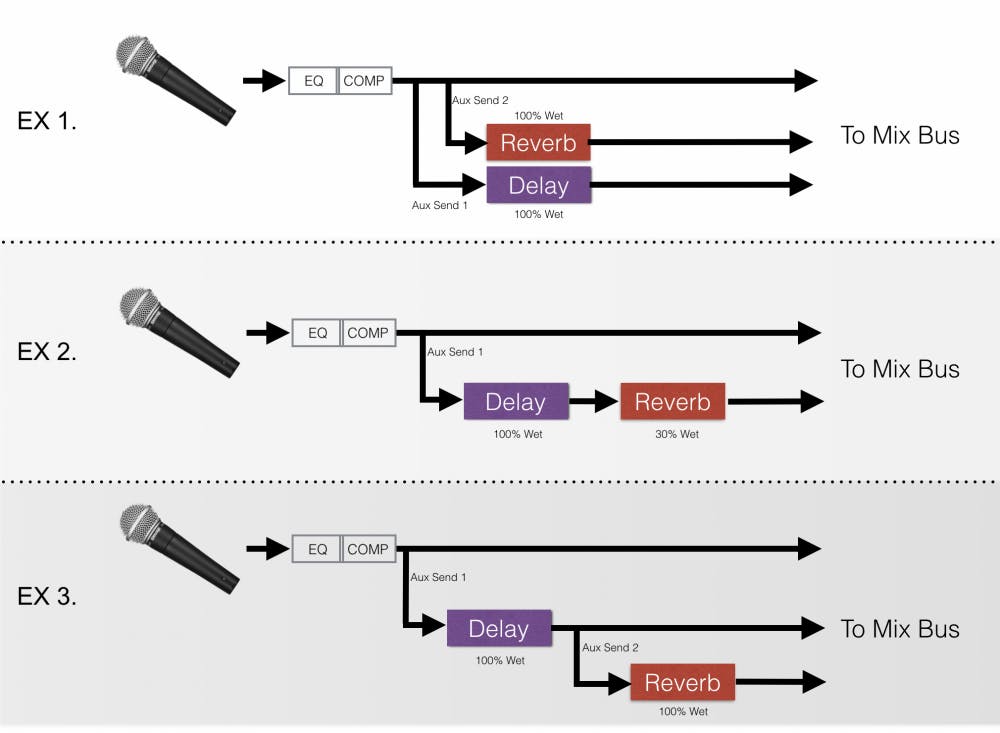
The basic effects chain: reverb → delay → gentle EQ (and why less is more)
A beginner-friendly chain:
Reverb: creates the room/space (don’t drown everything).
Delay: adds depth and movement (keep feedback modest).
Gentle EQ: clean up mud and harshness.
Common overdo problems (and quick fixes):
Too muddy/boomy: reduce low end a bit, shorten reverb decay.
Too sharp/icy: soften high frequencies, reduce resonance.
Everything feels washed out: lower wet mix, add a slightly drier layer for clarity.
Less is more because ambient relies on clarity inside the fog.
Exporting and looping cleanly (so your ambient track doesn’t “click” at the seam)
If your loop clicks at the seam, it’s usually a cut at a non-zero waveform point or reverb tails getting chopped.
Clean-loop checklist:
Align export to a bar boundary (or a clean zero-crossing)
Add a tiny fade-in and fade-out (even 5–20 ms helps)
Ensure reverb tails aren’t abruptly cut (render a tail, then crossfade)
Test the loop 5–10 times in a row before you commit
If your goal is a “forever” ambience bed, prioritize seamlessness over complexity—listeners forgive simplicity, not jarring seams.
Ambient music FAQs (the questions people keep asking)
Is ambient music the same as “study music”?
Q: Is ambient music the same as “study music”?
A: Not exactly. “Study music” is a use case (any music people use to study), while ambient music is a style built around atmosphere and low distraction. There’s a big overlap—ambient is often ideal for study—but lo‑fi, classical, and even some electronic can also be “study music” depending on the person and task.
Can ambient music help you sleep?
Q: Can ambient music help you sleep?
A: It can help some people relax and build a bedtime routine, especially when it’s low-dynamic and predictable. But if you notice it keeps you awake, causes irritation, or leads to more wake-ups (ads and sudden sounds are common culprits), it’s better to stop or switch to simpler masking like pink/brown noise. For broader context on how people use ambient in everyday listening, see this BBC overview.
Who “invented” ambient music?
Q: Who “invented” ambient music?
A: You can trace ambient’s roots through multiple experimental and minimalist traditions, but Brian Eno is widely credited with defining and popularizing “ambient” as a clear concept and label in modern music culture. If you want the practical definition again, jump back to the “What is ambient music?” section above.
What is the best ambient music for focus?
Q: What is the best ambient music for focus?
A: The best ambient music for focus is typically lyric-free, steady, and low on surprises—think long-form textures, gentle drones, and consistent volume. If you’re writing or reading, go simpler (less melody); if you’re doing routine tasks, you can tolerate a subtle pulse (ambient techno/chillout). When in doubt, use the 30-second self-test: if you start actively listening, it’s not focus-safe at that volume.
Make ambient music in minutes
Turn a simple idea into a calm background track for sleep, study, or relaxation.