

Dance music is music built around a strong beat, a repeatable groove, and an energy curve that makes movement feel natural. If you’re comparing house, techno, EDM, or playlist-friendly dance tracks, the differences usually come down to rhythm, bass weight, and how the song builds across sections. This guide walks through the definition, main genres, BPM ranges, DJ structure, and a simple way to sketch dance ideas faster if you want to create your own.
Dance music is any music designed to make your body move—typically through a clear pulse, repeatable groove, and an energy curve that builds and releases. Whether you’re picking tracks for a party, finding a steady tempo for workouts, or learning to produce your first loop, understanding dance music basics makes choosing (and making) the right track much easier.
From here, we move from the broad definition into the practical part: how to tell dance subgenres apart, why BPM matters but never tells the whole story, and where MelodyCraft fits if you want to sketch a groove before you jump into a DAW.
This guide covers a beginner-friendly definition, the most common dance music genres, typical BPM ranges, how DJs think about transitions, and simple ways to find “your sound” as a listener or creator.
What is dance music (and what makes a track “danceable”)?
At its core, what is dance music really asking: “What makes something feel like it’s meant for movement?” Danceable music usually has a predictable rhythmic grid, a strong relationship between kick and bass, and repeated motifs that make it easy to lock in physically—even if the melody changes.
Here are the most reliable listening clues of danceable music (regardless of genre):
A steady pulse you can count (often a clear kick drum pattern).
Repetition with small changes (loops evolve gradually instead of constantly switching ideas).
Low-end that “pushes” the groove (bass follows or answers the kick).
Section-based arrangement (intro → build → peak/drop → breakdown → outro).
An energy curve (tension rises, then releases—so the dance floor can breathe).
30-second self-check: Can you (1) clap on the beat within 5 seconds, (2) predict where the next section change happens, and (3) feel the bass “answer” the kick? If yes, it’s probably dance music.

Is dance music always electronic? (disco, funk, pop, Latin, K-pop)
No—dance music isn’t automatically “EDM.” Plenty of dance music genres are non-electronic (or only partly electronic), especially in social dance and mainstream pop contexts.
Here’s a quick way to think about it:
A few real-world examples of “non-EDM dance” characteristics:
Disco/funk: tight live basslines, bright hats, upbeat 4/4 feel, big chorus moments.
Latin dance: percussion-first grooves (clave/tumbao), call-and-response, strong swing/feel.
K-pop/pop: hook-forward songwriting with dance breaks, big drops, and choreography cues.

Dance music vs EDM: what’s the difference people actually mean
When people say dance music vs EDM, they usually mean one of two things:
Dance music (broad): any track that’s “made to dance to,” including disco, pop, Latin, funk, and electronic styles.
EDM (common modern usage): electronic dance music tied to electronic production, DJ culture, festivals/clubs, and track structures that mix well (long intros, predictable phrasing, energy-driven drops).
A practical comparison:
Terminology also shifts by scene and region: some listeners use EDM as a catch-all; others reserve it for big-room/festival styles and call everything else “electronic” or “club music.” For a clear foundational definition of EDM in context, see this overview from EDMProd on what EDM is.
The most common dance music genres (with quick “how it sounds” cues)
If you’re new to dance music genres, the fastest route is learning each genre’s “sound cues”: what the drums do, how the bass feels, and where the energy tends to peak. Below are quick “cards” you can use while listening.
House music: the 4-on-the-floor foundation
House music is the easiest dance style to spot because it’s built on a steady 4/4 kick drum—often called 4-on-the-floor—with hats and claps creating forward motion. Most house sits around 120–130 BPM, though it can drift slower (deep house) or faster (tech house).
How to recognize it quickly:
The kick hits evenly on every beat: “boom boom boom boom.”
Claps/snares often land on beats 2 and 4.
Hi-hats add a “shimmering” off-beat push.
A simple 1-bar listening map (count “1 2 3 4”):
Kick: 1, 2, 3, 4
Clap: 2, 4
Off-hat: “and” between beats (1&, 2&, 3&, 4&)
If you want a deeper tempo breakdown, this guide on house music BPM is a helpful reference point.
Techno vs trance: hypnotic groove or big melodic lift?
Techno and trance can share similar tempos (often 125–140 BPM), but they “aim” at different emotional centers.
Techno: groove-first and hypnotic. Repetition is the point—tiny sound-design changes keep you locked in. Harmony is often minimal, and the track’s “story” comes from texture and tension.
Trance: melody-first and uplifting (or dramatic). Big builds, bright synth hooks, and an obvious release moment are common. Harmonic movement matters more.
Key listening differences:
Build-up and drop: trance usually signals the peak more clearly; techno often rolls rather than “jumps.”
Sound palette: trance leans lush and wide; techno leans gritty, percussive, and mechanical.
Where people get confused: melodic techno borrows emotional chords and arps, but it often keeps techno’s rolling groove and restrained “hands-in-the-air” payoff.
Mini self-sort:
If you prefer being “in the loop” and riding tension, you’ll likely click with techno.
If you prefer big themes and melodic lift, trance will feel more obvious.
Drum & bass and dubstep: bass-first dance music
Drum and bass (DnB) and dubstep both prioritize low-end impact, but their rhythmic feel differs.
Drum & bass: typically 170–178 BPM, often using breakbeats (busy, chopped drum patterns). Even at high BPM, the groove can feel smooth because the bassline glues the rhythm together.
Dubstep: commonly 140–150 BPM, frequently felt in half-time—so it feels slower and heavier, with big snare hits and space between impacts.
Why they feel “bass-first”:
Bass isn’t just support; it’s the main hook (wobbles, reese bass, subs, growls).
Drops often spotlight a new bass phrase rather than a vocal chorus.
Beginner-friendly entry points (by sub-style):
DnB: start with liquid DnB if you want melody and smoother drums.
Dubstep: start with melodic dubstep if you want emotional chords with heavy drops.
Need a faster way to sketch dance tracks?
Turn a groove, BPM, and mood into a usable draft in MelodyCraft in minutes.
Dance music BPM guide: typical tempo ranges by genre (and why BPM isn’t everything)
A dance music BPM chart is useful, but it’s not a perfect genre detector. Genres overlap, and producers intentionally bend tempo norms. Still, BPM gives you a strong first clue—especially for playlist flow and DJ set planning.
Typical BPM by genre (common ranges, not strict rules):
For a broader tempo list across many styles, this BPM-by-genre reference is a handy starting point.
Why BPM isn’t everything (and why two tracks at 140 can feel totally different):
Drum density: more hits per bar can feel “faster” at the same BPM.
Half-time / double-time: dubstep at 140 can feel like 70; DnB at 174 can feel like 87.
Swing and syncopation: off-grid timing and shuffled hats change the body feel more than the number.
How to count BPM quickly (no apps needed)
To count BPM manually, you only need a clock and a steady tap.
Find the main pulse (usually the kick or snare).
Start a timer for 15 seconds.
Tap/count beats you hear in that window.
Multiply by 4 to get BPM.
Example: 32 beats in 15 seconds → 32 × 4 = 128 BPM.
Common mistakes to avoid:
Counting the hi-hats instead of the main beat (you’ll get double-time).
Getting tricked by half-time drops (you might count the snare hits instead of the underlying pulse).
If the BPM you get feels “impossible” for the style, try halving or doubling it once. Many dance tracks are written to be felt in two valid ways.
How DJs structure dance music sets: transitions, energy, and key mixing basics
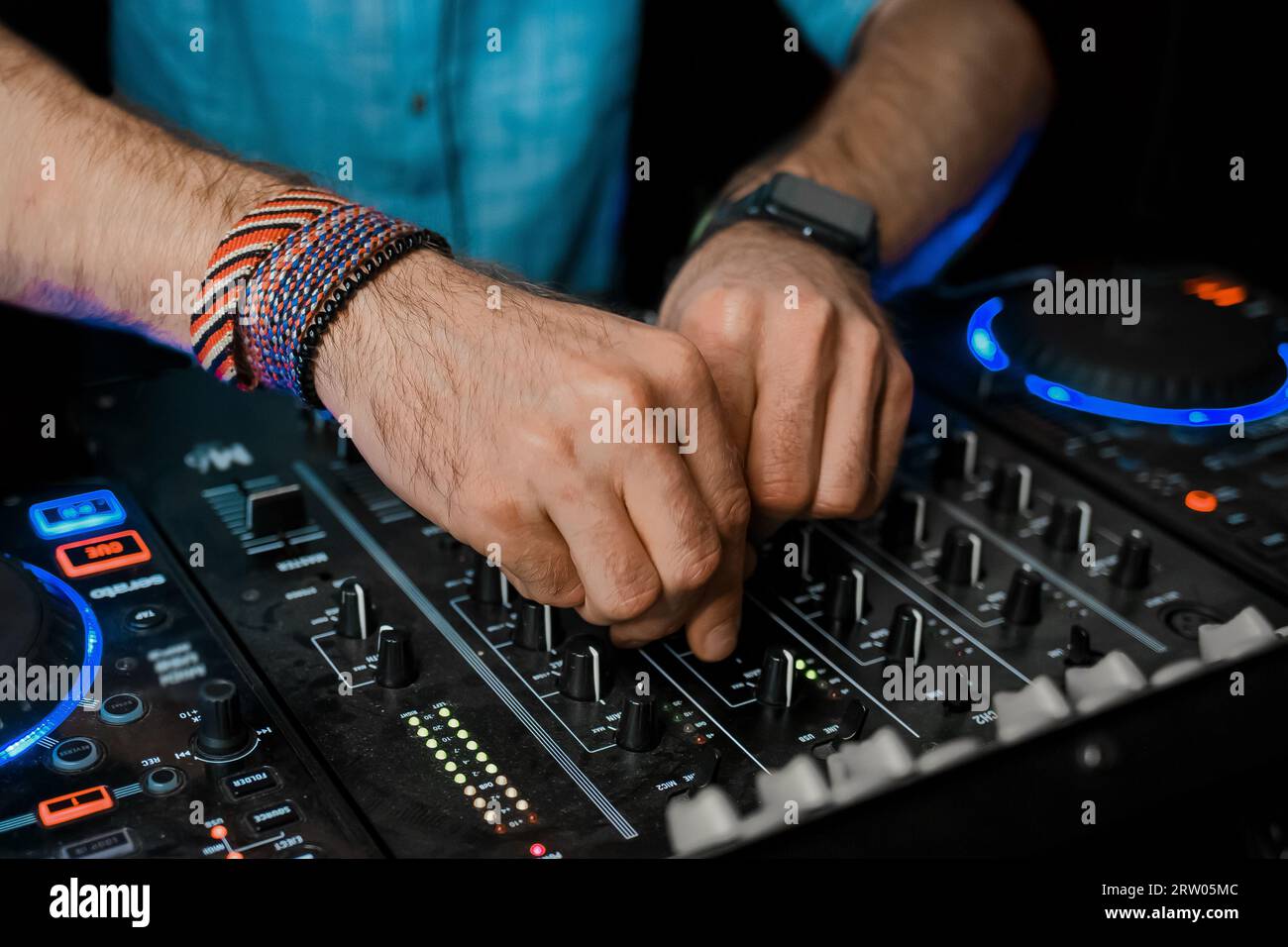
A big reason dance music works in clubs is that tracks are arranged to be mixed. Long intros, outros, and repeating 8/16/32-bar phrases make it easier for DJs to transition smoothly and control energy.
A simple way to understand a DJ set is: energy management + clean transitions.
Why dance tracks have long intros/outros
The DJ needs time to match tempo, align phrases, and blend without killing the groove.
Drums-first sections (fewer vocals) leave space for EQ and layering.
Basic transition concepts (in plain English):
Phrase matching: swapping tracks at the end of a 8/16/32-bar phrase so changes feel “natural.”
EQ mixing: cutting the bass on one track while bringing in bass on the other to avoid low-end clashes.
Filter sweeps: gently removing highs/lows to smooth the handoff.
If you want a genre-by-genre look at common mixing approaches, Pioneer DJ has a good breakdown of mixing techniques across major genres.
Energy template you can steal (works for parties and casual sets):
Open (10–15 min): lower intensity, clear groove, familiar textures
Climb (20–40 min): raise BPM or drum density gradually
Peak (10–20 min): biggest hooks/drops, strongest low-end
Breather (5–10 min): a breakdown-heavy track or warmer groove
Close (10–15 min): satisfying final run, then a clear landing
How to build a dance music playlist for your goal (party, workout, focus, studying)
A good dance music playlist isn’t just “good songs”—it’s controlled tempo, energy, and lyrical density for the job you need. Use your goal to decide BPM range, how often vocals appear, and how dramatic transitions should be.
Here’s a practical “scenario → BPM → mood → transition” cheat sheet:
Actionable rules (5 each):
Party dance music
Start with approachable grooves (disco/house) before harder styles.
Keep vocals to “every 2–3 tracks” so people can talk.
Avoid huge BPM jumps; change energy via drum density first.
Use “familiar-adjacent” tracks as anchors every 10–15 minutes.
Place peak tracks after the room feels full—don’t burn them early.
Workout
Choose a narrow BPM band so pace stays consistent.
Pick tracks with short breakdowns and fast restarts.
Favor strong kick/bass interplay (it drives movement).
Place the most intense tracks in the middle third.
End with slightly lower intensity to cool down smoothly.
Focus
Minimize lyrics (they compete with reading/writing).
Prefer repetitive arrangements with subtle variation.
Avoid sudden drops, sirens, and dramatic risers.
Keep BPM consistent across the whole playlist.
Use “textural” genres (deep house, minimal techno) as background.
Studying
Choose mellow energy and predictable phrasing.
Keep the low-end controlled (too much sub can distract).
Avoid attention-grabbing vocal chops.
Keep track lengths longer for fewer context switches.
If you need calm momentum, try 100–115 BPM grooves.
How to start making dance music (beginner workflow in 30–60 minutes)
To make dance music quickly, you don’t need perfect sound design—you need a repeatable workflow. The fastest beginner path is: drums → bass → hook → arrangement → transitions → simple mix.
A 30–60 minute beginner sprint (with suggested time boxes):
Drums (10 min): pick a kick, clap/snare, hats. Build a groove loop.
Bass (10 min): write a 1–2 bar bassline that locks with the kick.
Chords/melody (10 min): add a simple chord stab or 2–4 note motif.
Structure (10 min): copy your loop into sections (intro/build/drop/break).
Transitions (5 min): add risers, fills, filters, and mutes for contrast.
Quick mix (5–15 min): balance levels, tame low-end clashes, basic EQ.
Common beginner pitfalls (and quick fixes):
Kick and bass fighting: carve space with EQ, shorten bass notes, or sidechain the bass.
Everything playing all the time: mute parts; arrangement contrast creates “energy.”
Weak drop impact: remove elements right before the drop (1 bar of space works wonders), then bring the full low-end back in.
A simple dance music song structure template (bars & sections)
A reliable dance music song structure uses predictable phrase lengths (often 8/16/32 bars) so DJs can mix and listeners can anticipate movement changes. Think in “blocks,” not in verses.
DJ-friendly universal template (approx. 3–6 minutes)
Intro: 16–32 bars (drums + minimal hook)
Build: 16 bars (add tension, remove/tease bass)
Drop/Peak: 32–64 bars (full groove + main bass/hook)
Breakdown: 16–32 bars (reduce drums, reset tension)
Second drop: 32–64 bars (variation of the first)
Outro: 16–32 bars (strip back for mixing out)
Short-form “scroll era” template (approx. 1–2 minutes)
Micro intro: 4–8 bars
Fast build: 8 bars
Drop: 16–32 bars
Quick break + final hit: 8–16 bars
End: 4–8 bars
Why this works for mixing: intros/outros keep drums consistent, and changes happen on phrase boundaries—so overlays don’t feel random.
Create dance music faster with AI (when you need royalty-safe background tracks)
If you want dance music for a video, podcast, ad draft, or a quick creative sketch—but you don’t want to spend hours on sound design—an AI music generator can be a practical shortcut. The key is using AI for what it’s best at: fast iteration, consistent tempo, and generating multiple variations you can choose from.
Good use cases for AI dance music:
Royalty-safe background beds for YouTube and social videos
Podcast bumpers and transitions
Ad concepts and mood drafts before final production
“Idea starters” (groove + structure) you later recreate in your DAW
You can generate dance tracks by specifying genre, BPM, mood, and section length in tools like MelodyCraft. No matter which tool you use, always double-check the licensing/usage rights for your specific platform and monetization plan.

What to input: genre, BPM, mood, and structure prompts that work
The fastest way to get usable results is to be specific about (1) genre, (2) dance music BPM, (3) mood, and (4) structure. Below are 10 copy-ready prompts you can adapt (each includes tempo + sections).
House, 126 BPM, uplifting, intro 16 bars, build 16, drop 32, breakdown 16, outro 16(party)Deep house, 122 BPM, warm and minimal, long intro 32, groove 64, subtle breakdown 16, outro 32(focus)Techno, 132 BPM, hypnotic and industrial, intro 32, rolling peak 64, short break 16, outro 32(club)Melodic techno, 128 BPM, dark emotional, intro 16, build 16, drop 48, breakdown 24, final drop 48(gaming)Trance, 138 BPM, euphoric, intro 16, build 32, drop 64, breakdown 32, final drop 64, outro 16(workout)Progressive house, 124 BPM, cinematic, intro 32, gradual build 64, peak 64, outro 32(study)Drum and bass, 174 BPM, liquid, intro 16, drop 48, breakdown 16, drop 48, outro 16(workout)Drum and bass, 176 BPM, neuro, aggressive, intro 16, build 16, drop 32, break 16, drop 32(gaming)Dubstep, 140 BPM, half-time heavy, intro 8, build 16, drop 32, break 16, drop 32, outro 8(training)Disco-inspired, 120 BPM, funky and bright, intro 16, groove 64, chorus-like lift 16, groove 64, outro 16(party)
When results feel “close but not quite,” tweak only one variable at a time (e.g., keep genre/BPM fixed, change mood from “dark” to “punchy,” or extend the intro for easier DJ-style mixing).
Pricing & download considerations (credits, exports, and usage rights)
Before you download or pay for any dance music tool (AI or not), clarify three things: export formats, usage rights, and cost structure. This matters most if you plan to post on YouTube/TikTok, run ads, distribute a game, or monetize content.
A simple “check before you buy” list:
Can I download the track (and in which formats)?
Is there a limit on exports/credits per month?
Does the license cover commercial use and monetized platforms?
Do I need attribution, or is it optional?
What happens if I cancel—do I keep rights to past downloads?
If you’re evaluating MelodyCraft specifically, start with the current plan details on the MelodyCraft pricing page and match them to your publishing needs (personal vs commercial, frequency of downloads, and required formats).
FAQ: quick answers people ask about dance music
Q: What are the main dance music genres?
A: The most common umbrella genres include house, techno, trance, drum & bass, dubstep, and disco, plus many hybrids (progressive, melodic techno, liquid DnB, etc.).
Q: What BPM is most dance music?
A: A large portion of club-friendly dance music sits around 120–140 BPM, but major styles also live at ~100–115 (slower grooves) and ~170–178 (drum & bass).
Q: How can I tell house vs techno quickly?
A: House often feels bouncier and more “songy” with a classic 4-on-the-floor + clap pattern, while techno tends to feel more hypnotic, percussive, and texture-driven with longer rolling sections.
Q: Does dance music always need a drop?
A: No. Many dance tracks are groove-based and evolve gradually (especially in house and techno). “Drop” moments are common in festival-oriented EDM and bass music, but not mandatory.
Q: What does 4-on-the-floor mean?
A: It means the kick drum hits on every beat in 4/4 time—count “1, 2, 3, 4” and you’ll hear a kick on each number.
Q: Is EDM the same as dance music?
A: Not exactly. EDM is typically a subset of dance music focused on electronic production and DJ/festival context, while dance music includes non-electronic styles like disco, funk, Latin dance, and pop dance. As you explore, focus on what your body reacts to: tempo, bass weight, and how the track’s sections rise and release. That’s the fastest way to find your lane in dance music—whether you’re building playlists, learning DJ transitions, or starting your first production loop.
Make dance-ready music faster
Go from groove idea to a draft you can refine for playlists, workouts, or content clips.