

Cloud rap is one of hip-hop's most atmospheric and internet-native subgenres — a style built on dreamy synths, heavy reverb, and a lo-fi aesthetic that traded the club for the headphone experience. If you've ever heard a beat that sounds like it was recorded inside a cathedral made of fog, you've probably encountered cloud rap. This guide covers everything from the genre's origins and signature production techniques to the cloud rap artists who shaped it and a practical walkthrough for making your own cloud rap beats.
Cloud rap is one of hip-hop's most atmospheric and internet-native subgenres — a style built on dreamy synths, heavy reverb, and a lo-fi aesthetic that traded the club for the headphone experience. If you've ever heard a beat that sounds like it was recorded inside a cathedral made of fog, you've probably encountered cloud rap. This guide covers everything from the genre's origins and signature production techniques to the cloud rap artists who shaped it and a practical walkthrough for making your own cloud rap beats.

Where Did Cloud Rap Come From?
The term "cloud rap" didn't emerge from a record label press release or a music critic's column. It was coined in 2010 by a blogger named James Chambliss, who used it to describe a wave of rappers whose music felt weightless — as if the beats were floating somewhere above the concrete realities of traditional hip-hop. The name stuck because it captured exactly what listeners felt: vocals drifting through reverb, melodies dissolving into digital haze, and a mood that prioritized atmosphere over aggression.
The roots of cloud rap sit firmly in Southern hip-hop. The slow tempos, syrupy 808 bass, and chopped-and-screwed vocal processing that defined Houston's rap scene in the early 2000s provided the sonic foundation. What cloud rap producers did was strip away the trunk-rattling energy and replace it with ethereal textures — ambient pads, pitch-shifted samples, and layers of delay that made everything sound like it was echoing across an empty sky. The result was rap music that felt introspective, surreal, and deeply connected to internet culture at a time when MySpace and early YouTube were rewriting how music spread.
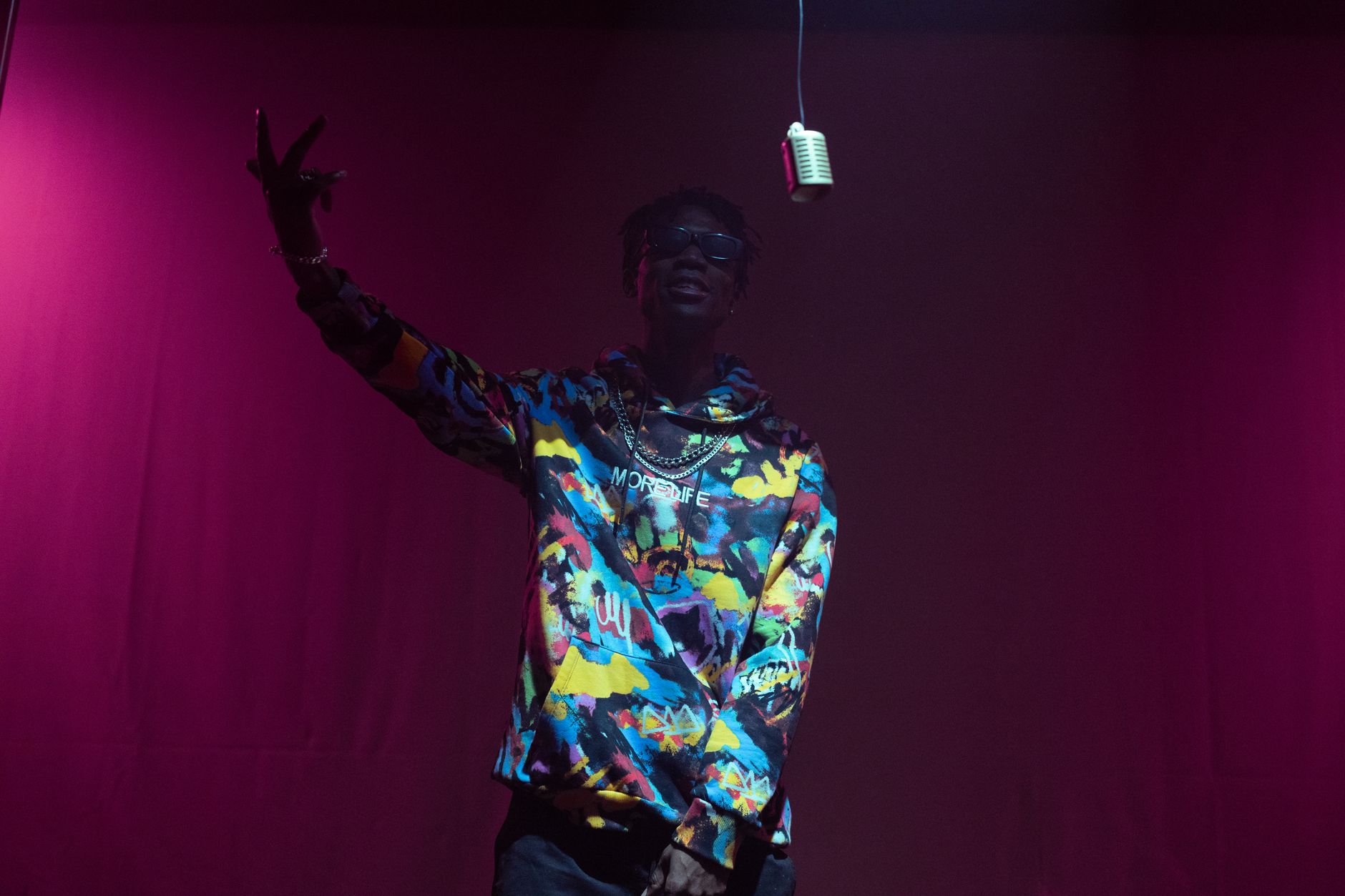
Lil B, Clams Casino, and the Birth of a Sound (2008–2011)
The story of cloud rap begins with a cold email. Around 2009, a young New Jersey producer named Clams Casino started sending beats through MySpace messages to Lil B, the prolific Bay Area rapper who was already flooding the internet with hundreds of loosies and mixtape tracks. Lil B responded, and the collaboration produced one of the genre's defining moments: "I'm God," a track built on a chopped Imogen Heap sample that sounded like nothing else in hip-hop at the time. The beat was cavernous, the vocals were murmured rather than shouted, and the whole thing felt like a transmission from another dimension.
Lil B's sheer volume of output — and his willingness to experiment with tone, delivery, and subject matter — made him the perfect vessel for this new sound. He wasn't trying to fit into mainstream rap; he was building what he called a "castle in the clouds," a creative space where traditional rules didn't apply. Clams Casino, meanwhile, went on to produce for mainstream artists, but his early work with Lil B established the cloud rap production blueprint: ethereal vocal chops, washed-out textures, and beats that breathed.
The genre's crossover moment came in 2011 when A$AP Rocky released Live.Love.A$AP. Produced in part by Clams Casino, the mixtape brought cloud rap's sonic palette to a much wider audience. Tracks like "Palace" and "Bass" proved that dreamy, reverb-soaked production could coexist with hard-hitting bars and genuine mainstream appeal. Suddenly, cloud rap wasn't just an internet curiosity — it was influencing the direction of hip-hop itself.
From Yung Lean to Drain Gang — Cloud Rap Goes Global (2013–2020s)
In 2013, a 16-year-old from Stockholm named Jonatan Leandoer Håstad uploaded a music video called "Ginseng Strip 2002" to YouTube. Performing under the name Yung Lean, he rapped in accented English over icy synths and trap drums, surrounded by Arizona Iced Tea cans and Windows 95 aesthetics. The video went viral, and cloud rap officially became a global phenomenon.
Yung Lean and his Sad Boys collective — including producer Yung Sherman and rapper Bladee — pushed cloud rap into new emotional territory. Their music was melancholic, self-aware, and steeped in internet irony. Bladee, in particular, went on to co-found Drain Gang (also known as Gravity Boys), a collective that fused trance music elements, Auto-Tuned vocals, and glitchy production into what fans call "drain" — a distinct evolution of cloud rap that has amassed a devoted global following.
Meanwhile, in the United States, collectives like Seshollowaterboyz (featuring Bones, Xavier Wulf, Chris Travis, and Eddy Baker) were pushing cloud rap in a darker, more aggressive direction. Their output helped bridge the gap between cloud rap's atmospheric production and the raw emotional intensity that would later define emo rap.

What Does Cloud Rap Sound Like?
Cloud rap is defined less by lyrical content and more by its production choices. If you're trying to identify the genre by ear, listen for these core characteristics:
Ethereal synth pads — Long, sustained chords that feel like they're hanging in mid-air. Think warm analog pads or shimmering digital textures rather than sharp stabs.
Reverb-heavy mixing — Nearly every element sits in a large reverb space. Vocals, hi-hats, and even bass notes often sound like they're echoing through a vast room.
Chopped and pitched vocal samples — Snippets of R&B or pop vocals, slowed down, pitched up, or reversed to create ghostly melodic hooks.
808 bass and trap drum patterns — The rhythmic backbone borrows from Southern trap: rolling hi-hats, snappy snares, and deep sub-bass. But the patterns tend to be sparser and slower.
Slow tempos (60–100 BPM) — Cloud rap rarely rushes. The pace gives space for atmosphere to develop and for listeners to sink into the texture.
Lo-fi texture and tape hiss — Many cloud rap producers intentionally degrade audio quality, adding vinyl crackle, bit-crushing, or tape saturation to create a nostalgic, worn-in feel.
If a beat makes you feel like you're floating through a foggy city at 2 AM, it's probably cloud rap.

Cloud Rap vs. SoundCloud Rap — What's the Difference?
These two terms get confused constantly, but they describe different movements with different origins and aesthetics. Cloud rap is a production-driven subgenre that emerged in the late 2000s, defined by its atmospheric, reverb-drenched sound. SoundCloud rap is a platform-driven movement from the mid-2010s, defined by its lo-fi punk energy, face tattoos, and DIY distribution ethos.
A SoundCloud rapper might use cloud rap production techniques, and many cloud rap tracks were uploaded to SoundCloud — but the two labels point to fundamentally different artistic priorities. Cloud rap is about mood; SoundCloud rap is about momentum.
15 Cloud Rap Artists Who Defined the Genre
Cloud rap has always been a decentralized movement, driven by collectives and internet communities rather than major labels. Here are 15 cloud rap artists across three generations who shaped the genre's identity, from its earliest experiments to its current evolution. For a deeper dive into each artist's catalog, Musicoholics has an excellent breakdown.
🔹 Pioneers (2008–2012)
Lil B — The godfather of cloud rap. His prolific output and fearless experimentation on tracks like "I'm God" created the space for the entire genre to exist. Key track: "I'm God" (prod. Clams Casino)
Clams Casino — The producer who defined the cloud rap sound. His chopped Imogen Heap samples and cavernous reverb became the genre's sonic signature. Key track: "Numb" (instrumental)
Main Attrakionz — Oakland duo whose mixtape 808s & Dark Grapes II became a cloud rap essential, blending Bay Area slang with hazy, smoke-filled production. Key track: "Chuch"
SpaceGhostPurrp — Brought a darker, occult-tinged edge to cloud rap through his Raider Klan collective, bridging Memphis rap and internet aesthetics. Key track: "Suck a Dick 2012"
🔹 Second Wave (2013–2018)
Yung Lean — The Swedish teenager who proved cloud rap had no geographic boundaries. His blend of sadness, irony, and icy production influenced an entire generation. Key track: "Ginseng Strip 2002"
Bladee — Drain Gang's most prolific voice, pushing cloud rap into glitchy, trance-adjacent territory with heavily processed vocals. Key track: "Obedient"
Bones — The most consistent figure in underground cloud rap, releasing dozens of projects through his TeamSESH collective with a dark, lo-fi aesthetic. Key track: "Dirt"
Xavier Wulf — Brought Memphis energy and anime-inspired imagery into cloud rap, creating a harder-edged variant that resonated with skate culture. Key track: "Thunder Man"
Night Lovell — Ottawa-based rapper whose deep voice and menacing production carved out a darker corner of the cloud rap landscape. Key track: "Dark Light"
Ecco2k — Drain Gang member known for blending cloud rap with art-pop sensibilities and avant-garde visual aesthetics. Key track: "AAA Powerline"
🔹 New Generation (2019–Present)
Yabujin — Mysterious producer-rapper whose chaotic, maximalist take on cloud rap has made him a cult figure on platforms like TikTok and Rate Your Music. Key track: "Adrenaline"
fakemink — Represents the newest wave of cloud rap, blending hyperpop textures with traditional cloud rap atmospherics. Key track: "Luv Spell"
xaviersobased — Carries forward the Lil B tradition of prolific, internet-first releases with a dreamy, lo-fi production style. Key track: "Cloud 9"
Sematary — Pushes cloud rap into "haunted mound" territory, combining distorted vocals with eerie, sample-heavy production. Key track: "Bunny Suit"
Karman — Emerging cloud rap voice blending ambient textures with introspective lyricism and minimal trap percussion. Key track: "Drift"

10 Essential Cloud Rap Songs Every Listener Should Know
These ten cloud rap songs span the genre's full timeline and showcase the range of moods and production styles that define it. Consider this your starter playlist.
Lil B — "I'm God" (prod. Clams Casino, 2009) — The track that crystallized cloud rap as a genre. Clams Casino's chopped Imogen Heap sample over booming 808s remains one of hip-hop's most otherworldly moments.
Main Attrakionz — "Chuch" (2011) — A hazy, smoke-ring anthem that captures early cloud rap's laid-back Bay Area energy.
A$AP Rocky — "Palace" (prod. Clams Casino, 2011) — The track that brought cloud rap production to mainstream hip-hop audiences via Live.Love.A$AP.
Yung Lean — "Ginseng Strip 2002" (2013) — The viral video that launched cloud rap's global second wave, dripping with ironic sadness and icy synths.
Bones — "Dirt" (2014) — Dark, minimal, and hypnotic. A perfect entry point into TeamSESH's vast catalog.
Bladee — "Obedient" (2018) — Drain Gang at its most refined: glitchy production, Auto-Tuned vocals, and a trance-like structure that rewards repeat listens.
Night Lovell — "Dark Light" (2015) — Deep-voiced menace over cavernous production. One of cloud rap's most cinematic tracks.
Xavier Wulf — "Thunder Man" (2014) — Memphis-flavored cloud rap with anime energy and hard-hitting delivery.
Ecco2k — "AAA Powerline" (2019) — Art-pop meets cloud rap in a track that feels like a digital fever dream.
Yabujin — "Adrenaline" (2023) — Chaotic, maximalist, and unmistakably new-gen. Proof that cloud rap continues to evolve.
Create a playlist with these tracks and listen in order — you'll hear the genre's evolution from ethereal minimalism to glitchy maximalism in under 40 minutes.
How to Make Cloud Rap Beats — A Step-by-Step Guide
Making cloud rap beats is more accessible than ever, whether you're working in a full DAW or using AI-assisted tools like MelodyCraft's AI rap generator. Here's a structured six-step process to build your first cloud rap instrumental from scratch. If you also want to turn that instrumental into a full vocal track, start with this beginner guide on how to make rap music.
Step 1: Choose Your DAW
Any major DAW works — FL Studio, Ableton Live, Logic Pro, or even GarageBand for early experiments. Cloud rap production doesn't require expensive plugins; many classic tracks were made with stock instruments and free VSTs. If you want to skip the DAW entirely and start with a melodic idea, AI beat generators can give you a foundation to build on.
Step 2: Find or Create Your Sample
Cloud rap lives and dies by its samples. Look for vocal chops from R&B tracks, ambient music, or even classical recordings. Pitch them down 3–5 semitones, reverse them, or layer multiple samples at different speeds. Splice and Looperman are solid sources for royalty-free material.
Step 3: Build the Pad and Melody Layer
Layer a warm synth pad underneath your sample. Use long attack and release times so the sound swells gradually. For the melody, try a simple piano or bell pattern — keep it sparse. Cloud rap melodies should feel like they're fading in and out of focus, not demanding attention.
Step 4: Program the 808 Drum Pattern
Start with a slow tempo between 65 and 90 BPM. Program a deep 808 kick with a long sustain, a crisp snare on beats 2 and 4, and rolling hi-hats with subtle velocity variation. Keep the pattern minimal — cloud rap drums support the atmosphere rather than driving it.
Step 5: Drench Everything in Reverb and Delay
This is where the "cloud" happens. Apply a large hall reverb to your synths, samples, and even your hi-hats. Add a stereo delay to the melody with a feedback setting around 30–40%. The goal is to make every element feel like it exists in the same vast, echoey space.
Step 6: Process the Vocals
If you're adding vocals, use heavy reverb, pitch correction (Auto-Tune or similar), and a touch of distortion or saturation. Many cloud rap vocals are intentionally buried in the mix, treated as another textural element rather than sitting on top of the beat.
Don't overthink it. Some of the most iconic cloud rap beats were made in a single session with minimal equipment. Mood matters more than polish.
Do SoundCloud Rappers Make Money? How Monetization Works
This is one of the most common questions aspiring cloud rap and SoundCloud artists ask — and the answer is yes, but the numbers require context. SoundCloud uses a fan-powered royalties model, meaning your earnings come directly from the listeners who actually stream your music, rather than being pooled across the entire platform.
Here's how the payment tiers break down:
The average payout hovers around $2.14 per 1,000 streams, though this varies based on listener location and subscription tier. SoundCloud requires a minimum balance of $25 before you can withdraw earnings, and payments are processed through Stripe.
For most independent cloud rap artists, streaming revenue alone won't cover rent. But it can fund equipment upgrades, marketing, or studio time — especially if you're releasing consistently. Tools like MelodyCraft can help you produce and release tracks faster by handling beat generation and vocal arrangement through AI, so you spend less time on production bottlenecks and more time building your catalog and audience.
5 Ways to Earn Beyond Streaming as a SoundCloud Rapper
Streaming is just one revenue stream. The most successful SoundCloud rappers — including many famous SoundCloud rappers who started with zero budget — diversify their income across multiple channels. Here are five proven paths:
Merchandise — Even a simple Printful or Shopify store with branded tees and hoodies can generate meaningful income. Bones built TeamSESH into a lifestyle brand partly through consistent merch drops tied to album releases.
Beat licensing — If you produce your own cloud rap beats, selling licenses through BeatStars or Airbit creates passive income. Price tiers typically range from $20 for a basic MP3 lease to $500+ for exclusive rights.
Sync placements — Cloud rap's atmospheric production makes it surprisingly well-suited for film, TV, and video game soundtracks. Platforms like Musicbed and Artlist connect independent artists with sync opportunities.
Live shows and DJ sets — Even small venue bookings at $200–500 per show add up. Cloud rap's aesthetic translates well to intimate, visually-driven live experiences with fog machines and projected visuals.
Patreon / Buy Me a Coffee — Direct fan support platforms let your most dedicated listeners fund your work in exchange for early access, behind-the-scenes content, or exclusive tracks. Even 50 supporters at $5/month equals $250 in predictable monthly income.
Stack these income sources. A single track release can generate streaming revenue, drive merch sales, attract sync interest, and give you Patreon content — all from one creative effort.

Turn Your Cloud Rap Ideas into Tracks
Use AI to generate beats, write lyrics, and produce full songs — no studio required.
Conclusion
Cloud rap started as an internet experiment — a handful of producers and rappers trading beats over MySpace messages and uploading tracks to platforms that barely existed a few years earlier. Today, it's a global subgenre with a devoted community, a distinct sonic identity, and a lineage that stretches from Lil B's early MySpace uploads to Drain Gang's sold-out European tours. Whether you're a listener discovering cloud rap for the first time or a SoundCloud rapper looking to craft your own atmospheric beats, the genre's DIY spirit remains its greatest strength. The tools are more accessible than ever, the audience is there, and the only real requirement is a willingness to let your music float.