

Whether you're building a playlist of the hardest trap rap songs ever made, trying to understand what makes an 808 pattern hit so hard, or ready to program your first beat from scratch, this guide covers all three angles. Hip hop trap music has reshaped the entire sound of modern rap — and once you understand how it works, you can start creating it yourself.
Whether you're building a playlist of the hardest trap rap songs ever made, trying to understand what makes an 808 pattern hit so hard, or ready to program your first beat from scratch, this guide covers all three angles. Hip hop trap music has reshaped the entire sound of modern rap — and once you understand how it works, you can start creating it yourself.
What Is Hip Hop Trap and Why Does It Dominate Modern Rap?
Hip hop trap was born in the early 2000s in Atlanta, Georgia, rooted in the street culture surrounding "trap houses" — locations where drugs were sold. Artists like T.I., Jeezy, and Gucci Mane didn't just rap about that environment; they built a sonic identity around it. The name itself came from the slang, and the music carried the weight, tension, and energy of that world into every bar and bass hit.
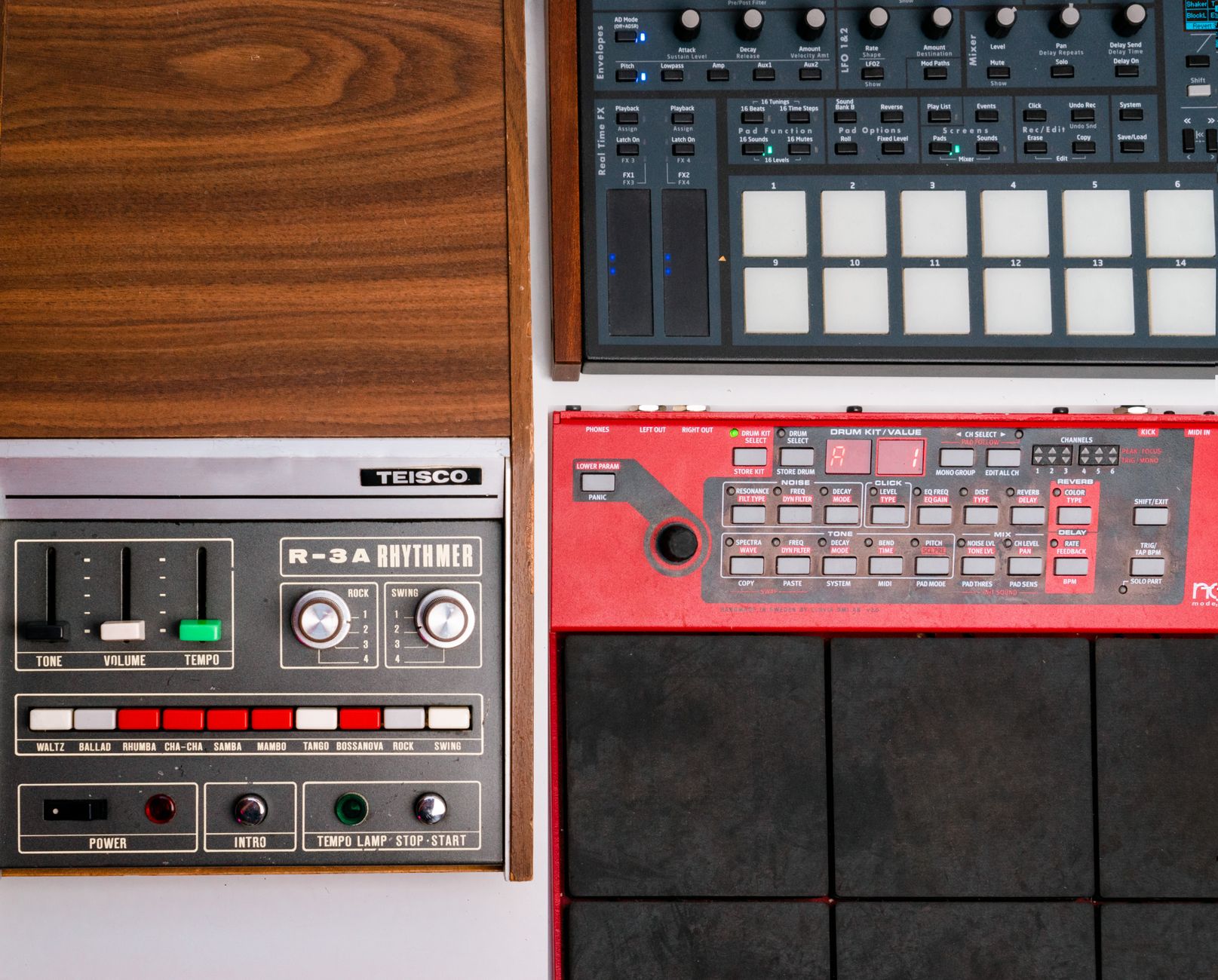
At the core of trap rap is the Roland TR-808 drum machine — or, more accurately, the sampled and synthesized descendants of its iconic sounds. The booming 808 bass, crisp snares, and rattling hi-hats became the DNA of a production style that would eventually overtake boom-bap, G-funk, and crunk as the dominant sound in hip hop. Producers like Shawty Redd, Lex Luger, and later Metro Boomin codified these sonic choices into a formula that was endlessly adaptable.
Today, hip hop trap isn't just a subgenre — it's the default production framework for mainstream rap. From Billboard chart-toppers to SoundCloud loosies, the trap template shapes how beats are programmed, how vocals are delivered, and how songs are structured. Its influence has spilled into pop, electronic music, Latin reggaeton, and even K-pop, making it one of the most globally impactful sounds to emerge from American hip hop.
5 Sonic Elements That Define a Trap Beat
Understanding trap beat patterns starts with recognizing the five building blocks that appear in virtually every trap production:
808 Bass — The foundation of every trap beat. These deep, sustained bass notes provide the low-end rumble that you feel in your chest. Producers often pitch the 808 to play melodic basslines rather than using a separate bass instrument.
Rapid Hi-Hats — Programmed in 16th-note or 32nd-note rolls, hi-hats give trap its signature nervous energy. The speed and rhythmic variation of the hi-hat pattern is often what separates a basic beat from a professional-sounding one.
Snappy Snares and Claps — Landing hard on beats 2 and 4, the snare or clap provides the backbeat. Trap snares tend to be bright, punchy, and layered with claps for extra crack.
Dark Synth Melodies — Minor-key synthesizer lines, eerie pads, and pitched-down samples create the moody, atmospheric top layer. Think haunting piano loops, detuned bells, or ominous string patches.
Triplet Flow — While not a drum element per se, the triplet rhythmic feel — three evenly spaced notes per beat — defines how both hi-hats and vocal deliveries move in trap. Migos popularized the triplet vocal flow, and it's now embedded in the genre's identity.
When analyzing a trap beat, listen for the hi-hat pattern first — it's the fastest-moving element and usually the easiest way to identify the production style.

15 Best Trap Rap Songs Every Fan Should Know
The best trap rap songs span two decades of evolution. From the raw street anthems that launched the genre to the polished, melodic hits dominating streaming platforms today, these 15 hip hop trap songs represent the essential listening canon.
Classic Trap Anthems (2003–2012)
These early trap rap songs defined the blueprint and proved the sound could move from Atlanta's underground to mainstream radio.

Golden-Era Bangers That Shaped the Sound (2013–2019)
This period saw hip hop trap songs evolve from regional street music into the dominant global sound. Melody crept in, production got more cinematic, and streaming platforms amplified everything.
New-Wave Trap Hits You Need on Your Playlist
Most "best trap songs" lists stop around 2019. But the genre hasn't slowed down — it's mutated. These post-2020 tracks represent where the best trap rap songs are heading now.
Trap Beat Patterns Breakdown — Kick, Snare & Hi-Hat Programming
If you want to make trap music rather than just listen to it, understanding trap beat patterns at the programming level is essential. Let's break down a standard 2-bar trap drum pattern — the kind you'll hear underneath most of the songs listed above. For the full song-building process beyond drums — lyrics, flow, recording, and structure — see our guide on how to make rap music.
The typical trap beat sits between 130–170 BPM (though it's often felt as a half-time groove around 65–85 BPM). The kick drum anchors beat 1 and lands on various off-beat positions to create bounce. The snare or clap locks in on beats 2 and 4. And the hi-hats do the heavy lifting rhythmically, cycling through 16th notes with occasional 32nd-note rolls for tension and release.
What makes trap programming distinct from other hip hop styles is the space between the kick hits. In boom-bap, the kick is busy and syncopated. In trap, the kick is more sparse and deliberate, leaving room for the 808 bass to sustain and breathe. That contrast between the rapid hi-hats up top and the slow, heavy low end is what gives trap its characteristic feel.
Step-by-Step: Programming Your First Trap Drum Loop
Follow these five steps to build a solid trap drum loop from scratch, even if you've never opened a DAW before:
Step 1: Set Your BPM to 140–150. This is the sweet spot for most trap beats. Your DAW will feel fast, but remember — the groove is felt in half-time, so the actual vibe is closer to 70–75 BPM.
Step 2: Draw Your Hi-Hat Pattern. Start with straight 16th notes across both bars. Then add variation: remove a few hits to create gaps, and add 32nd-note rolls on beats 3 and 4 of the second bar. This push-and-pull is what makes the pattern feel alive.
Step 3: Place Your Kick and Snare. Drop the kick on beat 1 of both bars, then add one or two off-beat kicks (try the "and" of beat 3). Place the snare firmly on beats 2 and 4. Keep it simple — the kick-snare relationship should feel locked and predictable.
Step 4: Layer Your 808 Bass. The 808 should follow the kick pattern but sustain longer. Pitch it to match your melody's key. Let the 808 notes ring out until just before the next hit — overlapping 808s create muddy low end.
Step 5: Adjust Velocity for Feel. Go back through your hi-hats and lower the velocity on off-beat hits. This creates a natural dynamic swing. Do the same for any ghost kicks — they should be felt, not heard at full volume.
Export your loop and listen on headphones, earbuds, and a phone speaker. Trap beats need to translate across playback systems, especially since most listeners stream on mobile.
Advanced Techniques: Triplet Rolls, Ghost Notes & Beat Switches
Once your basic loop is solid, these three techniques will push your trap beat patterns from beginner to professional territory.
Triplet Hi-Hat Rolls divide each beat into three equal parts instead of two or four. Program a section of triplet hi-hats leading into the snare on beat 4 — it creates a rushing, cascading effect that's become a trap signature. The key is using triplets sparingly; if every bar has them, they lose their impact.
Ghost Notes are quiet kick or snare hits placed between the main beats. They're barely audible on their own, but they add subtle groove and complexity. Try placing a ghost snare at 15–20% velocity on the "e" of beat 3. You'll feel the difference even if you can't consciously hear it.
Beat Switches break the pattern entirely — usually at the halfway point of a verse or before a hook. Drop out the hi-hats, change the 808 pattern, or shift the snare placement. Artists like Travis Scott and Playboi Carti use beat switches to keep listeners off-balance, and producers like those featured on Native Instruments' trap production guide have broken down the mechanics behind these transitions in detail.
Don't overuse beat switches in a single track. One well-placed switch creates a moment; three or four make the song feel unfocused.
5 Best Trap Beat Maker Tools for Beginners and Pros
You don't need a full studio setup to start making trap beats. Whether you're a complete beginner or a working producer looking for faster workflows, these five trap beat maker tools cover a range of needs and budgets.
MelodyCraft stands out for users who want to skip the learning curve entirely. Instead of programming individual drum hits, you describe the vibe you're going for and let the AI handle the arrangement. For producers who already know their way around a DAW, it's also a powerful ideation tool — generate a starting point in seconds, then export and refine.

How MelodyCraft Helps You Create Trap Beats in Minutes
The MelodyCraft AI rap generator simplifies trap beat creation into three steps. First, you type a prompt describing what you want — something like "dark trap beat, 145 BPM, heavy 808s, minor key piano melody." Next, you select a style direction and let the AI generate a full arrangement. Finally, you preview, tweak, and export.
The biggest advantage is that you don't need any DAW experience. There's no MIDI programming, no sample hunting, no mixing. You get a production-ready track that you can use as-is for demos, social content, or freestyle sessions — or import into your DAW for further customization.
For artists who write lyrics first and need a beat to match, this workflow flips the traditional process. Instead of searching through hundreds of type beats on YouTube, you generate something tailored to your exact vision in minutes.
What's Next for Hip Hop Trap in 2026 and Beyond?
Hip hop trap isn't fading — it's fragmenting. The genre that once had a single recognizable sound now branches into rage-trap, melodic trap, pluggnb, and drill-trap hybrids, each with its own production conventions and audience. This diversification is a sign of health, not dilution. When a genre can absorb influences from K-pop (artists like BIBI and Jay Park regularly use trap production), Afrobeats (Burna Boy's trap-influenced tracks chart globally), and Latin music (Bad Bunny's reggaetón-trap fusion), it's operating as a musical lingua franca rather than a niche.
AI-powered production tools are accelerating this evolution. Platforms like MelodyCraft are lowering the barrier to entry so dramatically that a 15-year-old with a phone can produce a trap beat that would have required thousands of dollars in studio time a decade ago. This democratization means more voices, more experimentation, and faster iteration on the trap template.
Short-form video platforms — TikTok, Instagram Reels, YouTube Shorts — have also changed how trap music spreads. A 15-second snippet with the right 808 pattern can go viral before a full song even exists, which means producers are increasingly designing beats for immediate impact rather than slow-burn album listening. The trap beat of 2026 will likely be shorter, hookier, and engineered for the scroll.

Start Making Trap Beats Today
Turn a simple text prompt into a full trap production — no studio required.